Info
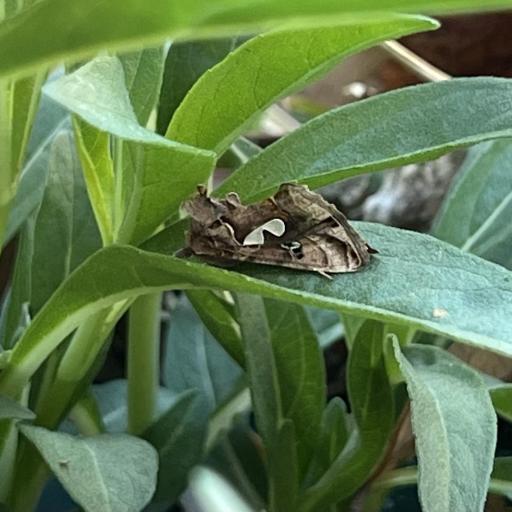
The Bilobed Looper is a master of "metallic embroidery." Often mistaken for a piece of weathered bark at first glance, this moth carries a shimmering secret on its wings that looks like hand-poured liquid silver. While it is a common sight in gardens across the Americas, its elegant camouflage makes it a rewarding find for any sharp-eyed nature lover.
🔍 How to Identify
- 🥈 The Silver "Teardrop": The most striking feature is a bright, reflective silver spot in the center of each dark forewing. This mark is "bilobed" (split into two parts), resembling a tiny, glowing figure-eight or a pair of teardrops.
- 🟤 Velvety Texture: Its wings are a deep, mottled chocolate brown with subtle purplish hues, helping it vanish against tree trunks and dried leaves during the day.
- 📐 Tufted Thorax: When resting, the moth often displays prominent tufts of hair-like scales on its "shoulders," giving it a distinctive hunched or triangular silhouette.
🌲 Habitat & Ecology
- 🥗 A Buffet of Greens: The larvae (caterpillars) are generalists, meaning they aren't picky eaters. You’ll often find them munching on a wide variety of garden plants, including lettuce, beans, and ornamental flowers like sunflowers.
- 🌙 Nighttime Navigator: As adults, they are strictly nocturnal. They are frequent visitors to backyard porch lights and serve as understated pollinators for pale, night-blooming flowers.
- 🏃 The "Looping" Gait: Because the caterpillars lack several middle legs, they move by arching their bodies into a high "loop" and stepping forward, a movement style that gives them the name "Looper."
⚠️ Safety & Toxicity
- ✅ Completely Harmless: The Bilobed Looper does not bite, sting, or possess any irritant hairs. It is safe for children to observe and for curious pets to sniff.
- 🥬 Garden Impact: While they are not "scary" in a physical sense, they can be a minor nuisance to gardeners. A high population of their caterpillars can leave significant holes in your leafy greens, though they rarely cause permanent damage to the plant.
✨ Fun Fact
The Bilobed Looper belongs to the Plusiinae subfamily, a group of moths often called "The Goldsmiths" because so many of its members have evolved these strange, brilliant metallic spots on their wings to mimic dappled sunlight or dewdrops!
More Details








