Info
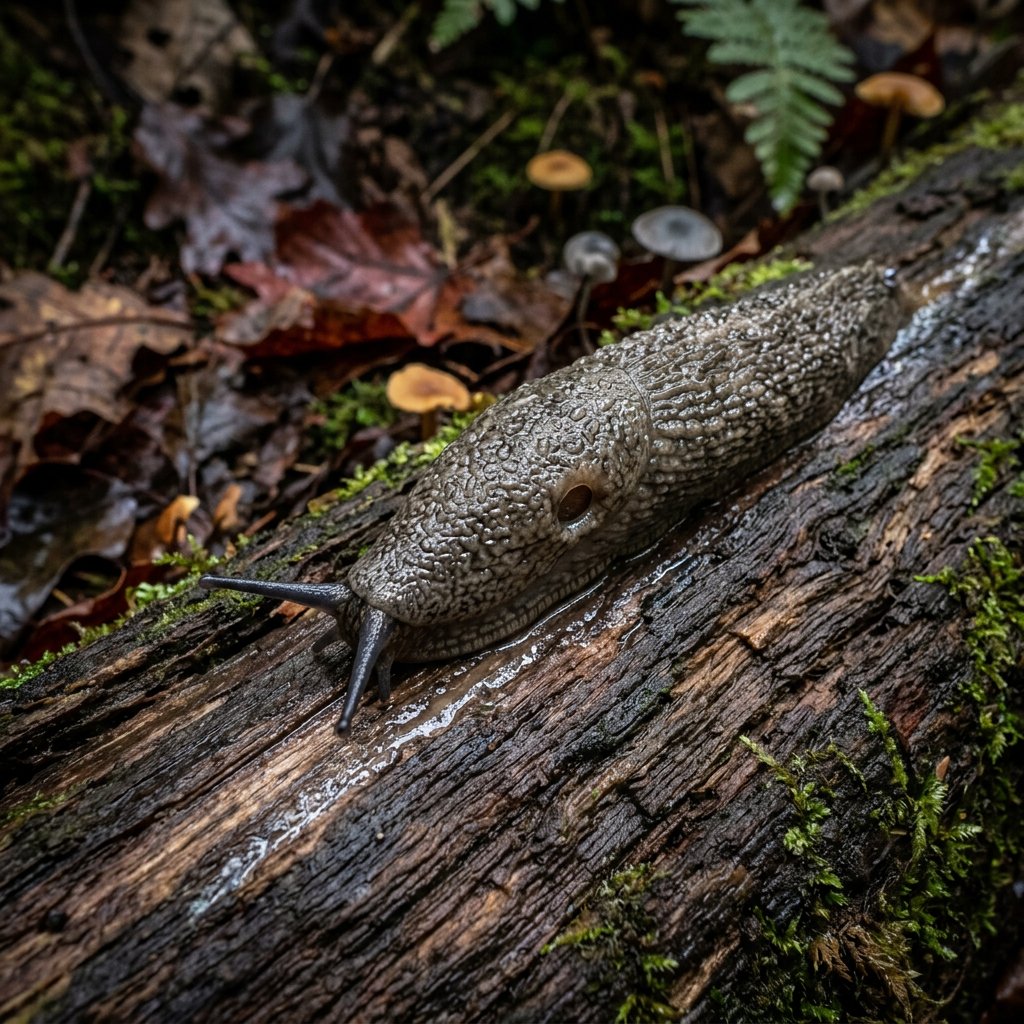
Meet the Changeable Mantleslug, a silent wanderer of the woodland floor and a master of forest camouflage. Often mistaken for a piece of damp bark or a bit of bird dropping, this "friend" of the forest plays a vital role in cleaning up decaying matter. Its name comes from the wide variety of mottled patterns it displays, allowing it to disappear against the trees it calls home.
🔍 How to Identify
- 🧥 The Mantle: Unlike common garden slugs, its mantle (the fleshy part on the back) extends over almost the entire length of its body, looking like a tiny, organic raincoat.
- 🎨 Mottled Patterns: The body is usually a pale cream or tan, heavily decorated with dark brown or charcoal-gray blotches that look like lichen or moss.
- 🐌 Smooth Silhouette: It lacks the "keel" (a raised ridge) found on the backs of some other slug species, giving it a soft, rounded appearance when moving.
🌲 Habitat & Ecology
- 🍄 Fungal Forager: You won't find this slug eating your prize hostas; instead, it prefers "wilder" snacks like fungi, algae, and lichens found on tree trunks.
- 🌳 Arboreal Lifestyle: While many slugs hide under rocks, the Changeable Mantleslug is a talented climber often spotted on the trunks of smooth-barked trees like American Beech or Maple, especially after a heavy rain.
⚠️ Safety & Toxicity
- 🛡️ Safe to Observe: This slug is completely non-aggressive and does not possess a stinger or a bite that can break human skin.
- 🦠 Wash After Wandering: Like all mollusks, they produce a sticky mucus that can be hard to wash off. More importantly, wild slugs can carry parasites; enjoy watching them, but always wash your hands thoroughly if you happen to move one off a trail.
✨ Fun Fact
The "changeable" part of its name doesn't mean it changes color like a chameleon! Instead, it refers to the incredible diversity of patterns seen across the species—no two Changeable Mantleslugs look exactly the same!
More Details








