Info
Known as the "Fire Beetle" or "Charcoal Beetle," this remarkable insect is the ultimate smoke-chaser of the insect world. While most creatures flee from the heat of a forest fire, Melanophila acuminata flies directly toward the flames, using specialized sensors to find smoldering trees. It’s a vital part of nature’s cleanup crew, arriving at a disaster site before the smoke has even cleared to begin the cycle of forest renewal.
🔍 How to Identify
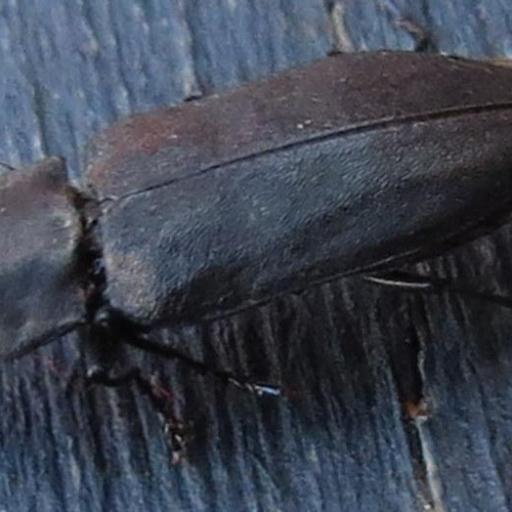
- 🖤 Obsidian Armor: The beetle is entirely jet-black and has a matte, charcoal-like finish that provides perfect camouflage against scorched bark.
- 🪲 Jewel Shape: It possesses the classic "Jewel Beetle" silhouette—a flattened, torpedo-shaped body that is roughly 10 millimeters long.
- 📡 Thermal Sensors: If you look closely at its underside near the middle legs, you might see tiny "pits." These are sophisticated infrared sensors that act like thermal imaging cameras to detect heat.
🌲 Habitat & Ecology
- 🔥 The Fire Seeker: These beetles are rarely seen unless there has been a recent fire. They are attracted to the infrared radiation of flames and the chemical scent of smoke, often traveling miles to find a burn site.
- 🪵 Woodland Nursery: They seek out freshly burned coniferous trees (like pines and firs). The beetle lays its eggs in the scorched wood because the tree’s natural chemical defenses have been neutralized by the heat, making it a safe buffet for the larvae.
- 🛠️ Forest Engineer: By being the first to colonize burnt wood, they help break down dead timber, allowing nutrients to return to the soil and making way for new growth.
⚠️ Safety & Toxicity
- ✅ Status: Entirely harmless to humans, pets, and healthy gardens.
- 🦟 Details: They do not sting and are not considered pests. However, because they are attracted to heat, they are famous for "crashing" summer BBQs or landing on smokers. They may occasionally give a tiny, harmless "test nip" to skin if they mistake your body heat for a warm tree, but they carry no venom or diseases.
✨ Fun Fact
The Melanophila acuminata is so good at detecting heat that the US military has actually studied its infrared organs to help design better heat-seeking missile technology! These tiny beetles can "see" a forest fire from over 30 miles away.
More Details








