Info
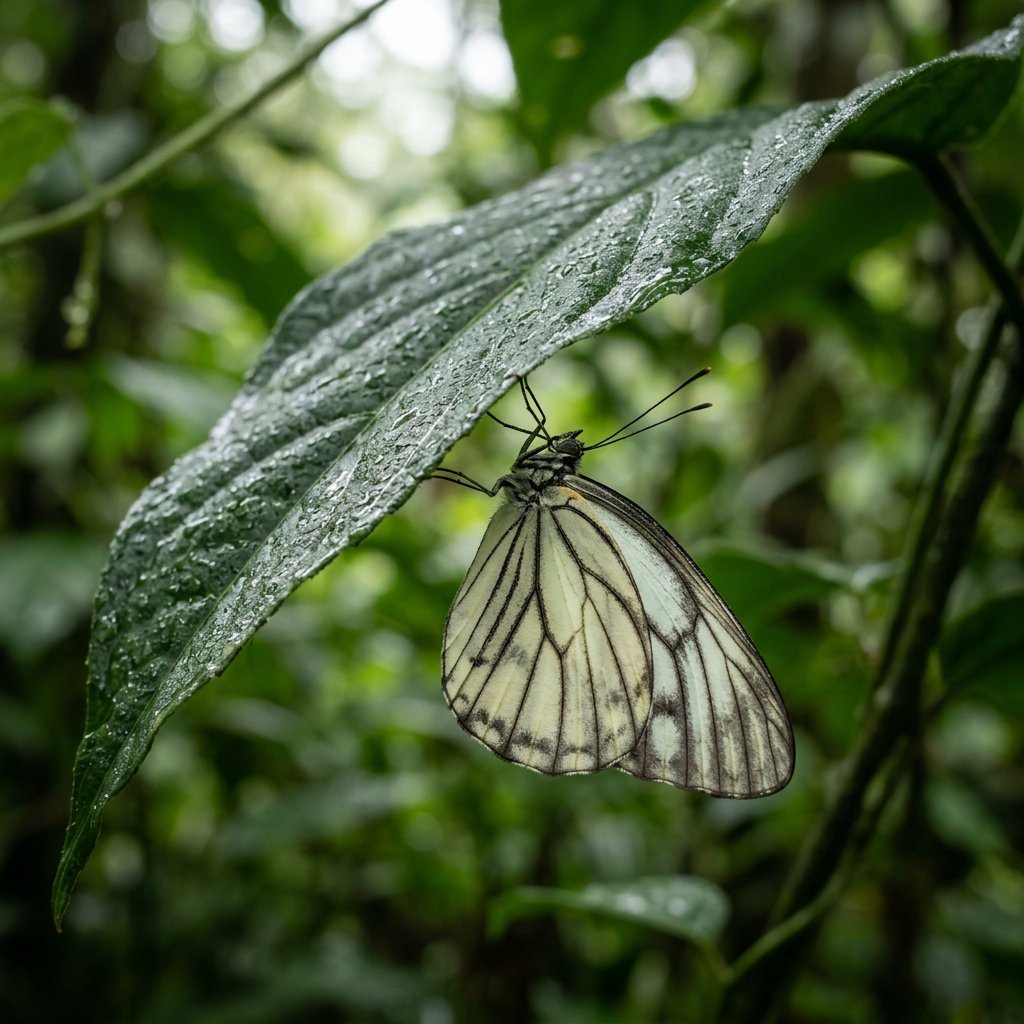
Known as the "Mimic Whites," the butterflies of the Melete genus are the undercover agents of the tropical rainforest. Often found fluttering through the humid canopies of Central and South America, these delicate insects have survived for millennia by pretending to be someone they aren’t—specifically, other butterfly species that predators find foul-tasting or toxic.
🔍 How to Identify
- 🦋 Wing Patterns: They typically feature white or creamy yellow base colors, often framed by bold, dark charcoal or black margins that give them a high-contrast appearance.
- 🎭 The Mimic Look: Their wing shape is often slightly more elongated than common garden whites, evolved to mimic the flight silhouettes of the "unpalatable" Heliconius or Pereute butterflies.
- 📏 Slender Anatomy: They possess very slim, elegant bodies and delicate, club-tipped antennae used to "smell" nectar sources from a distance.
🌲 Habitat & Ecology
- 🍃 Mistletoe Specialists: Interestingly, the larvae of Melete butterflies often feed on parasitic mistletoes (family Loranthaceae). This means you’ll usually find them in forests where these "vampire plants" cling to the branches of host trees.
- 🌸 Nectar Seekers: As adults, they are active pollinators. They prefer the bright, sun-drenched edges of tropical forests where they can find flowering shrubs to fuel their erratic, energetic flight.
- 💧 Puddle Clubbing: Like many of their Pieridae cousins, males may congregate on damp sand or mud to drink mineral-rich water, a behavior known as "puddling."
⚠️ Safety & Toxicity
- ✅ Completely Harmless: These insects are "friends" to humans. They do not possess a sting, they do not bite, and they are not known to be agricultural pests.
- 🦋 Fragile Wings: While they are safe to observe, their wings are covered in microscopic scales. Touching them can rub these scales off, which may hinder their ability to fly and regulate body temperature.
✨ Fun Fact
The genus is named after Melete, one of the original three Greek Muses of mythology. Her name translates to "Practice" or "Thought"—fitting for a butterfly that has "practiced" the art of mimicry so well that even experienced collectors are often fooled!
More Details








