Info
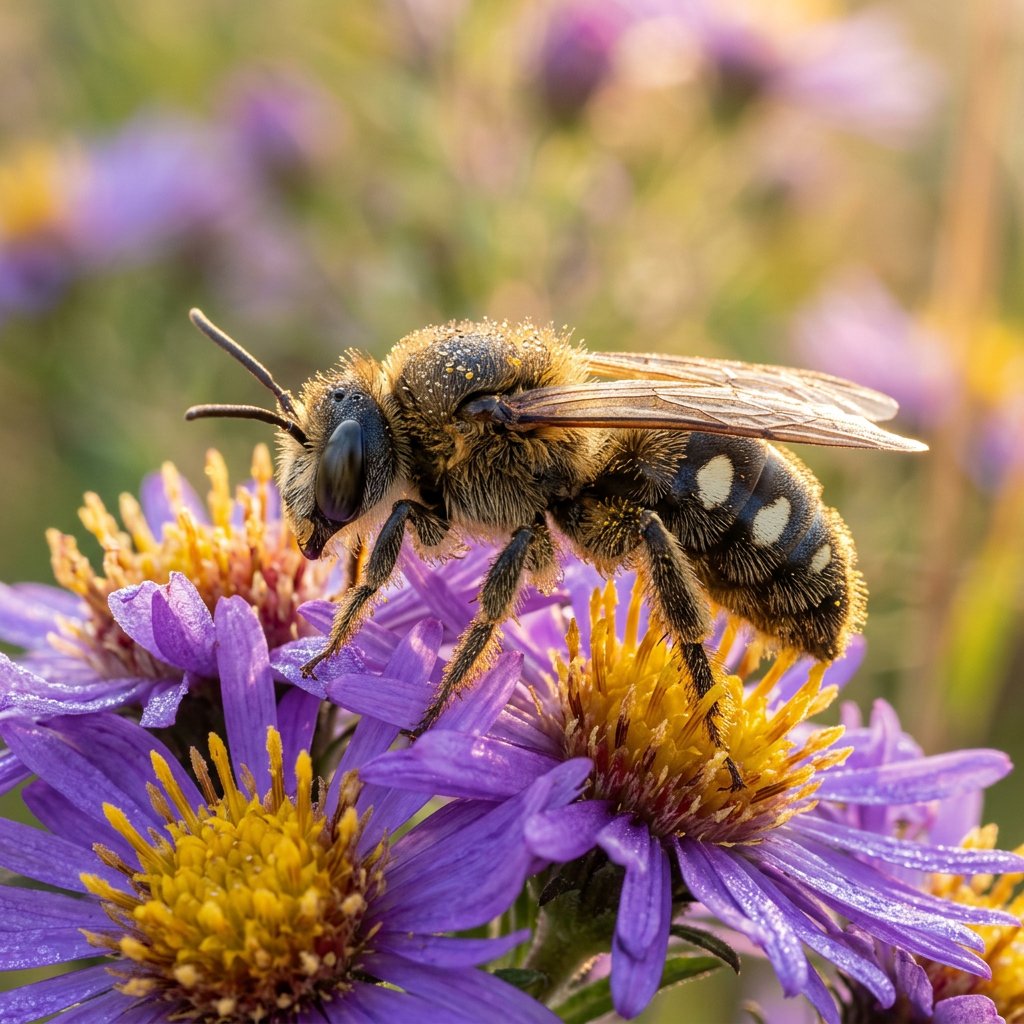
Often mistaken for a small bumblebee or a dark fly at first glance, the Two-spotted Long-horned Bee is a tireless garden hero. This solitary bee is a champion pollinator of summer blooms and is easily recognized by its sleek, jet-black body. While the name "long-horned" sounds intimidating, it refers to the male's impressively long antennae, which they use to navigate the garden in search of a mate.
🔍 How to Identify
- ⚫ The "Two Spots": Look for two distinct, small white or pale-yellow spots near the end of the abdomen. This is the clearest giveaway for this species.
- 📏 Extra-long Antennae: In males, the antennae are exceptionally long—often reaching the full length of their body. Females have shorter, more standard-sized antennae.
- 🧹 Pollen Brushes: Females feature thick, shaggy hairs on their hind legs called "scopa," which they use to carry massive amounts of pollen back to their nests.
🌲 Habitat & Ecology
- 🌻 Summer Specialists: These bees are most active in the hot months of July and August. They are generalist pollinators but show a strong preference for sunflowers, daisies, and the Aster family.
- 🕳️ Solitary Ground Nesters: You won't find them in a hive. Females dig individual tunnels in the soil, often choosing bare patches of earth or the edges of garden beds to lay their eggs.
- 🌾 A Solitary Life: Because they don't have a colony to defend, these bees are incredibly efficient; every female is a "queen" of her own small burrow.
⚠️ Safety & Toxicity
- 🟢 Non-Aggressive: These bees are extremely docile. Since they have no hive or honey to protect, they have no reason to attack humans or pets.
- 🐝 Low Sting Risk: Only the females have stingers, and they will only use them if they are physically handled or stepped on. Their sting is generally considered mild compared to a social wasp or honeybee.
✨ Fun Fact
When the sun goes down, male Two-spotted Long-horned Bees don't return to a nest. Instead, they gather in small groups on plant stems, clamp down with their jaws (mandibles), and "sleep" while dangling in the air until morning!
More Details








