Info
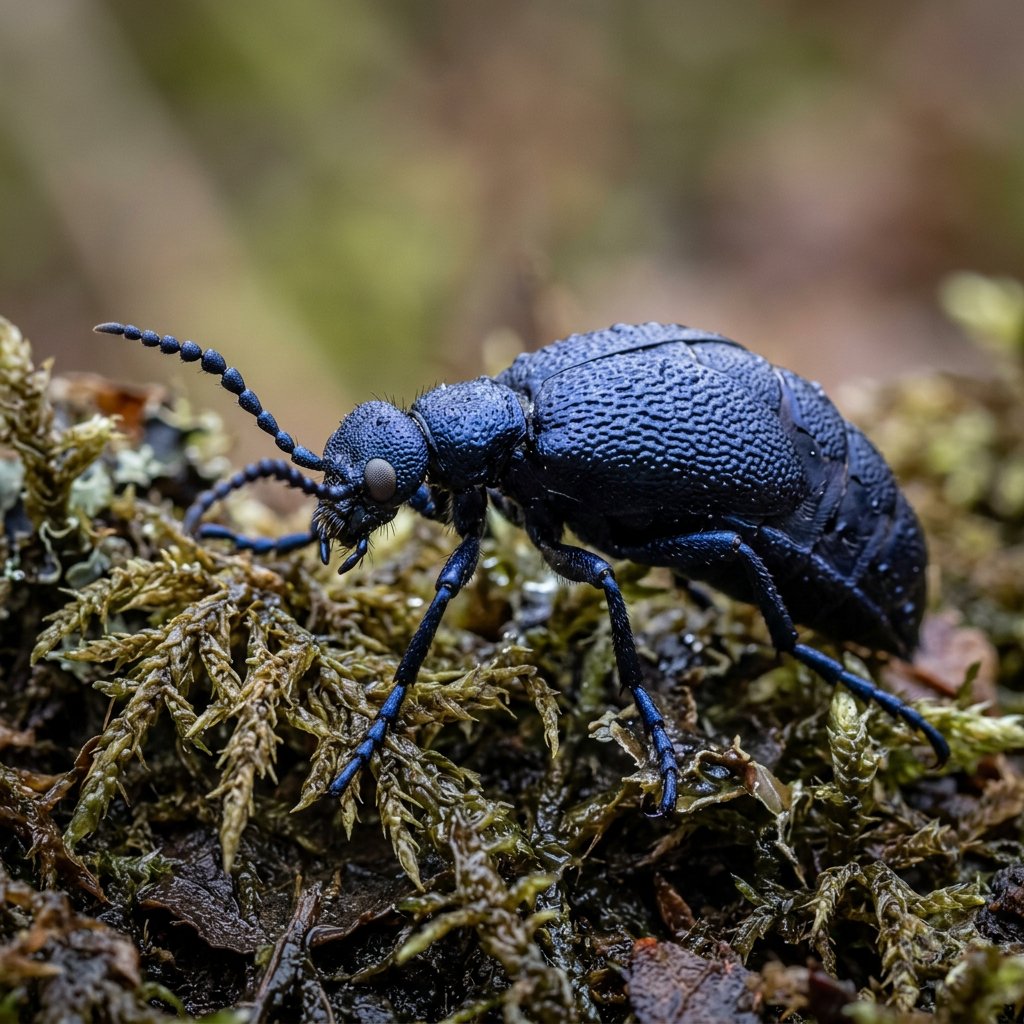
The Violet Oil Beetle looks like a shimmering piece of jewelry dropped in the grass, but its "oil" nickname is actually a warning. Known for its striking metallic sheen and curiously oversized body, this beetle is a fascinating example of nature’s complex lifecycles. While it may look slow and vulnerable, it carries a potent chemical defense that makes predators think twice before taking a bite.
🔍 How to Identify
- 💎 Iridescent Color: The entire body is a deep, glossy black saturated with brilliant violet, purple, or indigo reflections that sparkle in the sunlight.
- 🧥 Truncated Wing Cases: Unlike most beetles, its wing cases (elytra) are very short and overlap at the base, leaving the large, segmented abdomen completely exposed.
- 🐜 Chunky Silhouette: They have a distinctive "heavy" look; the females in particular have massive, bloated abdomens when they are full of eggs, making them appear almost too heavy to move.
🌲 Habitat & Ecology
- 🐝 The Great Bee Heist: This beetle is a "cleptoparasite." Its tiny larvae, called triungulins, climb onto flowers and hitch a ride on solitary bees. Once inside the bee's nest, the larvae feast on the bee's eggs and stored pollen.
- 🌿 Meadow Wanderer: You are most likely to spot adults crawling slowly through wildflower meadows, woodland clearings, or coastal grasslands during the spring while they search for mates and soft plants to munch on.
⚠️ Safety & Toxicity
- 🧪 Chemical Defense: When threatened, the Violet Oil Beetle "reflex bleeds," oozing a foul-smelling, oily yellow fluid from its joints.
- 🚫 Blister Warning: This fluid contains cantharidin, a potent toxin that can cause painful blisters and skin irritation upon contact.
- 🐾 Keep Distance: Ensure pets and children do not try to pick up or lick the beetle, as the toxin is dangerous if ingested. If you must move one, use a leaf or a stick.
✨ Fun Fact
The Violet Oil Beetle is a master of "phoresy," which is the biological term for hitchhiking. The larvae are so desperate for a ride that they sometimes accidentally cluster on the wrong insects—like flies or honeybees—only to realize too late that they’ve hitched a ride to the wrong house!
More Details