Info
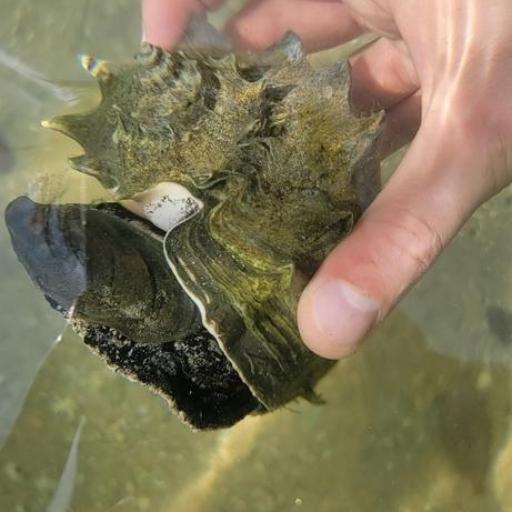
Despite the name sometimes causing confusion, the Crown Conch (Melongena corona) isn't an insect at all—it is a striking predatory marine snail! Named for the regal, spiked "crown" circling its spiral shell, this gastropod is a master of the intertidal zone. Often found prowling through Florida’s mangroves and salt marshes, it is a fascinating creature that acts as a tiny, armored tiger of the shoreline.
🔍 How to Identify
- 🐚 The Crown: The most defining feature is a row of sharp, prominent spines or "points" along the shoulder of the shell's largest whorl.
- 🎨 Earthy Patterns: The shell is typically a creamy white or tan base, decorated with bold, dark brown to purplish spiral bands.
- 📐 Pear-Shaped Profile: The shell has a wide, flared opening (aperture) and tapers toward the bottom, reaching lengths of 2 to 5 inches.
🌊 Habitat & Ecology
- 🦀 Coastal Hunter: This snail lives in the "buffer zones" of the coast, such as oyster bars, salt marshes, and mangrove roots where the water is brackish (a mix of salt and fresh).
- 🍽️ The Predator's Diet: Unlike garden snails that eat leaves, the Crown Conch is a carnivore. It uses its specialized mouthparts to feast on oysters, clams, and even other snails.
- 🔄 Tide Walker: They are incredibly hardy and can survive being out of the water for hours during low tide, waiting patiently for the sea to return.
⚠️ Safety & Toxicity
- ✅ Friendly Observer: The Crown Conch is "friend" rather than "foe." It does not sting, bite humans, or carry venom like the dangerous tropical Cone Snail.
- 🌵 Sharp Spines: While not toxic, the "crown" points can be quite sharp. Handle them gently to avoid small punctures or scratches to your skin.
- 🐱 Pet Safety: If you bring a shell home, ensure it is empty. If a pet finds a live one on the beach, the shell's hard structure and spines could pose a choking or internal injury hazard if chewed.
✨ Fun Fact
The Crown Conch is a master of adaptation! Scientists have found that the saltier the water is, the larger and more decorative the snail's "crown" spines tend to grow. Conchs living in fresher, low-salinity water often have much smaller, blunter spikes.
More Details








