Info
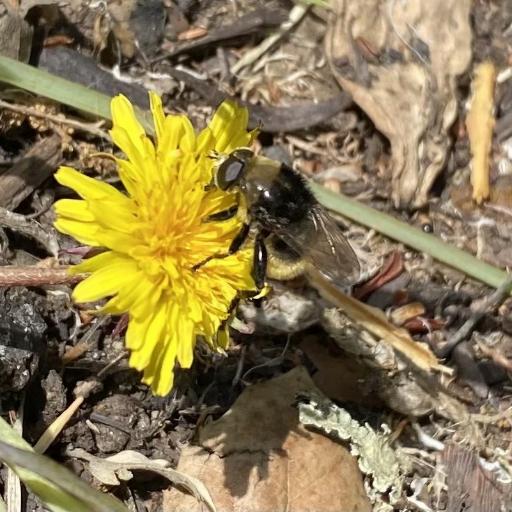
Often mistaken for a small bumblebee, Merodon equestris—commonly known as the Greater Bulb Fly—is nature's ultimate undercover agent. While its fuzzy, colorful body might make you instinctively pull your hand away, this insect is actually a harmless hoverfly that has evolved to look like a bee to scare off predators. To a gardener, it is a bit of a "frenemy": a beautiful pollinator as an adult, but a sneaky tenant for your flower bulbs during its larval stage.
🔍 How to Identify
- 🐝 The Great Pretender: Its body is covered in dense hair that can be orange, yellow, or black. Because these colors vary so much, it can look like several different species of bumblebee.
- 👀 Fly Eyes: Unlike bees, which have smaller eyes on the sides of their heads, this fly has massive, wrap-around eyes that take up most of its face.
- 🪽 The Wing Tell: Look closely at the wings—it only has one pair, whereas bees have two. It also has a unique "spurious vein" in the wing that is a hallmark of the hoverfly family.
🌲 Habitat & Ecology
- 🌷 Bulb Specialist: As the name suggests, this fly is deeply tied to bulbous plants like Daffodils, Narcissus, and Lilies. You will most likely spot them hovering near these flowers in late spring and early summer.
- 🍳 Life Underground: While the adults drink nectar and pollinate your garden, the larvae (maggots) live inside flower bulbs. They eat the heart of the bulb, which can sometimes cause your favorite spring flowers to produce only leaves or fail to grow entirely.
⚠️ Safety & Toxicity
- 🛡️ Harmless to Humans: Despite its "stinger-ready" appearance, the Greater Bulb Fly is completely stingless and does not bite. It is a "mimic," meaning its only weapon is a convincing costume.
- 🐾 Pet Friendly: It poses no threat to curious cats or dogs. However, for the "health" of your garden, it is considered a minor pest; if you find soft, mushy bulbs in the fall, you may have had a visit from their larvae.
✨ Fun Fact
The Greater Bulb Fly is such a talented actor that it doesn't just look like a bee—it sounds like one too! It can vibrate its wings to produce a high-pitched buzz that perfectly mimics the sound of a stressed bumblebee to keep birds from eating it.
More Details








