Info
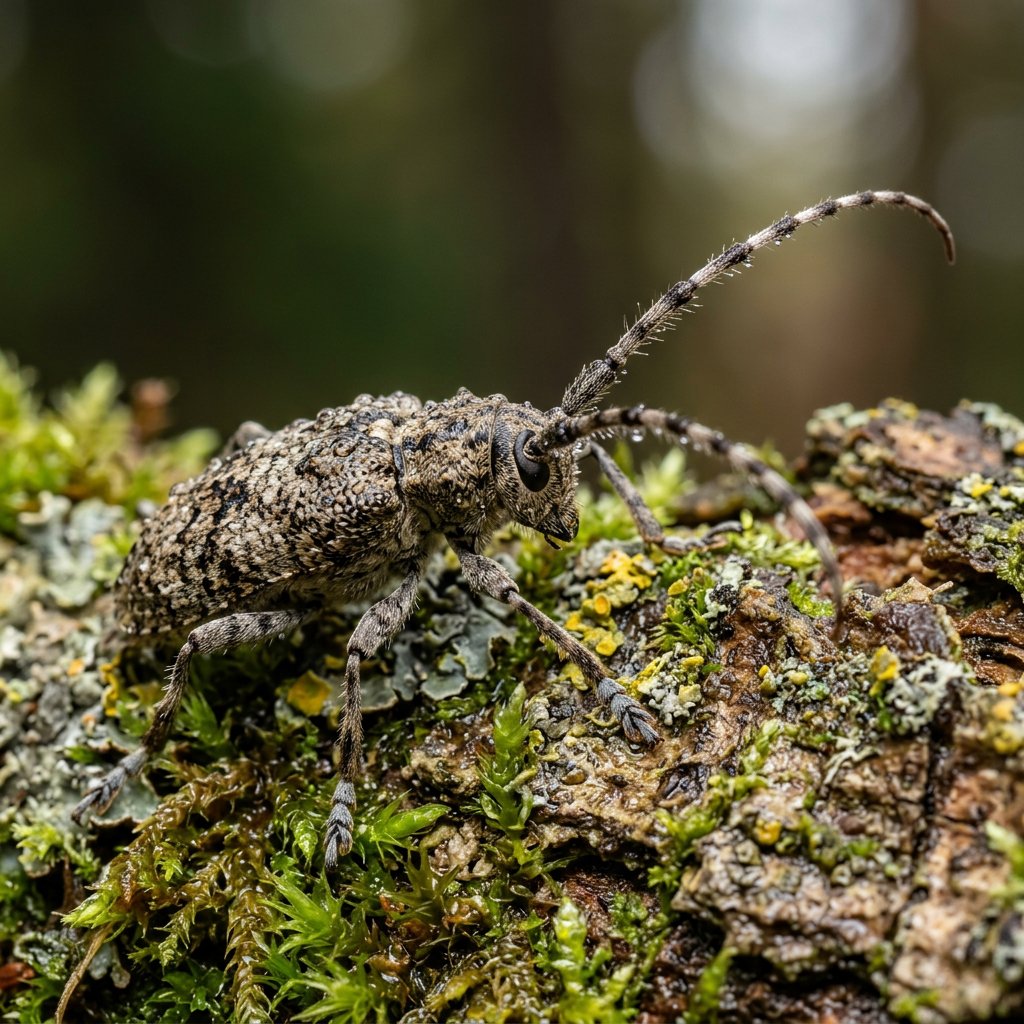
Known as the Gray-marbled Longhorn Beetle, this insect is a master of camouflage that looks more like a piece of lichen-covered bark than a living creature. Often found haunting ancient woodlands, it plays the role of a quiet recycler, spending its life hidden in plain sight. While its long, sweeping antennae might look intimidating, it is a gentle giant of the beetle world.
🔍 How to Identify
- 🎨 The Pattern: Its wing cases (elytra) are covered in a complex, "nebulous" mosaic of gray, black, and ochre hairs that perfectly mimic the texture of mossy tree bark.
- 📏 The Antennae: True to its "Longhorn" name, its antennae are often longer than its body, featuring distinct alternating bands of light and dark rings.
- 🏢 The Silhouette: Unlike many sleek beetles, Mesosa nebulosa has a stout, somewhat rectangular body with a flattened appearance that helps it press tightly against tree trunks to disappear.
🌲 Habitat & Ecology
- 🍂 The Forest Recycler: This beetle is a "saproxylic" species, meaning it relies on dead or decaying wood. It is a vital friend to the forest, helping to break down fallen branches and return nutrients to the soil.
- 🌳 Preferred Hosts: You are most likely to spot them on deciduous trees, particularly Oak, Beech, and Hazel. They prefer sun-warmed wood that is still attached to the tree but has begun to decay.
- 🌙 Night Owl Habits: They are primarily nocturnal or crepuscular (active at dusk). During the day, they remain perfectly still on bark, relying entirely on their camouflage to avoid hungry birds.
⚠️ Safety & Toxicity
- ✅ Status: Completely harmless to humans and pets.
- 🛡️ Defense Mechanisms: They possess no sting and are not venomous. While they have mandibles designed for chewing wood, they are not aggressive and will only attempt to "pinch" if handled very roughly.
- 🏡 Garden Impact: They do not attack healthy garden plants or structural timber in homes; they only seek out specific types of rotting woodland bark.
✨ Fun Fact
The "fuzz" on its back isn't just for color—the hairs are arranged in different directions and lengths to create a 3D visual effect, making the beetle look like a bumpy piece of moss even when viewed from the side!
More Details








