Info
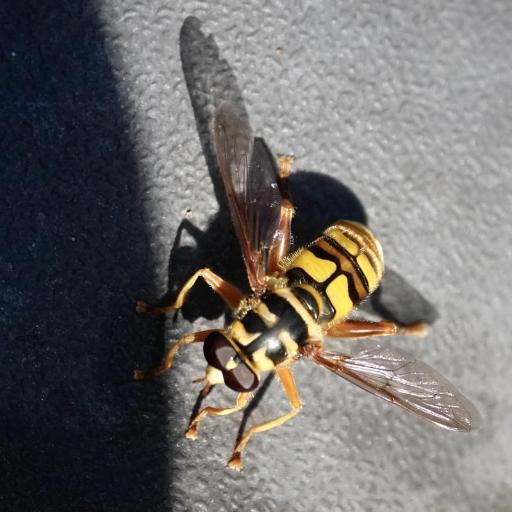
Meet the Virginia Giant Flower Fly, also known as the "Yellowjacket Hover Fly." This insect is nature’s ultimate bluff artist, sporting a bold, intimidating costume to keep predators at bay. While it looks like it stepped straight out of a hornet’s nest, it is actually a gentle pollinator that would much rather visit a daisy than defend a territory.
🔍 How to Identify
- 🐝 The Great Disguise: It mimics a large wasp or yellowjacket with bright yellow and black banding, but it is significantly larger than most common wasps, often reaching an inch in length.
- 👀 Fly-Like Eyes: Unlike the narrow eyes of a wasp, this fly has massive, wrap-around compound eyes that take up most of its head—a dead giveaway of its true identity.
- ✈️ Wing Count: If you look closely, it has only one pair of wings (Diptera), whereas the wasps it mimics have two pairs.
- 🚁 Hovering Flight: It has the incredible ability to hover perfectly still in mid-air before darting away, a flight pattern rarely seen in the stinging insects it copies.
🌲 Habitat & Ecology
- 🌸 Nectar Lover: As an adult, this fly is a "friend" to the gardener. It spends its days hopping from flower to flower, feeding on nectar and pollen, and helping your plants reproduce.
- 🪵 Woodland Nursery: Unlike hornets that build paper nests, the larvae of the Virginia Giant Flower Fly live in the moist, decaying heartwood of fallen trees or old stumps. They play a vital role in breaking down organic matter in deciduous forests.
- 🍂 Forest Edges: You are most likely to spot them in sun-dappled areas where the forest meets a field or garden, especially during the warm summer months.
⚠️ Safety & Toxicity
- ✅ Harmless Bluff: Despite its scary appearance, this insect is completely harmless to humans and pets.
- 🚫 No Stinger: It possesses no stinger and is not known to bite. Its only defense is its "Batesian mimicry"—the hope that you’ll be too afraid of its yellow stripes to bother it.
- 🤏 Gentle Nature: It is quite docile and will usually only fly away if approached. There is no risk of "swarming" as they are solitary insects.
✨ Fun Fact
These flies are so committed to their "tough guy" act that they even mimic the sound of a wasp. If they feel threatened, they can vibrate their wings to create a low-pitched buzz that sounds remarkably like an angry hornet!
More Details








