Info
Often mistaken for the more famous Funnel-web, the Red-headed Mouse Spider is a burrow-dwelling architect found across mainland Australia. Its name stems from an old, debunked myth that it could dig deep tunnels like a mouse. While the males are unmistakable with their "painted" red heads, they are shy creatures that spend most of their lives hidden in sophisticated underground bunkers.
🔍 How to Identify
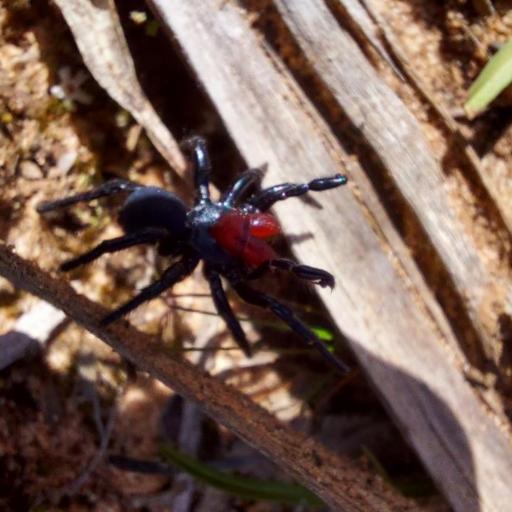
- 🔴 The Crimson Hood: Only the males sport the signature look—a brilliant, eye-catching red cephalothorax (head and chest area) that contrasts sharply against a glossy blue-black abdomen.
- 🌑 The Midnight Matriarch: Females are much larger and bulkier than males, but they lack the red coloring, appearing entirely deep brown or jet black with a glossy finish.
- ⚔️ Formidable Fangs: Both sexes possess massive, bulbous fangs that move vertically (up and down). These are thick and powerful, designed for pinning prey against the walls of their burrows.
🌲 Habitat & Ecology
- 🏰 Double-Door Dungeons: These spiders are masters of silk-work, building deep, silk-lined burrows that can reach 50cm underground. They often feature two "trapdoors" at the entrance to confuse predators and ambush passing insects.
- 🚶 The Rainy Wanderer: While females almost never leave their burrows, you are most likely to spot a male "prowling" across your garden or driveway during the day, particularly after heavy rain, as they search for a mate.
⚠️ Safety & Toxicity
- 🚫 Potentially Dangerous: The venom of the Red-headed Mouse Spider is highly toxic and contains components similar to those found in the Sydney Funnel-web spider.
- 🚑 Medical Emergency: While they are known to give "dry bites" (biting without injecting venom), any bite should be treated as a medical emergency. Seek immediate hospital care; luckily, Funnel-web spider antivenom is highly effective against their bite.
- 🐾 Pets & Children: Because they are often active during the day and move slowly, they can be tempting for curious pets or children. Keep a safe distance and do not attempt to handle them.
✨ Fun Fact
Unlike many of their heavy-bodied relatives who stay strictly on the ground, Mouse Spider spiderlings are "aviators." They use a technique called ballooning, releasing a strand of silk into the air to catch the wind and "fly" miles away to start new colonies!
More Details








