Info
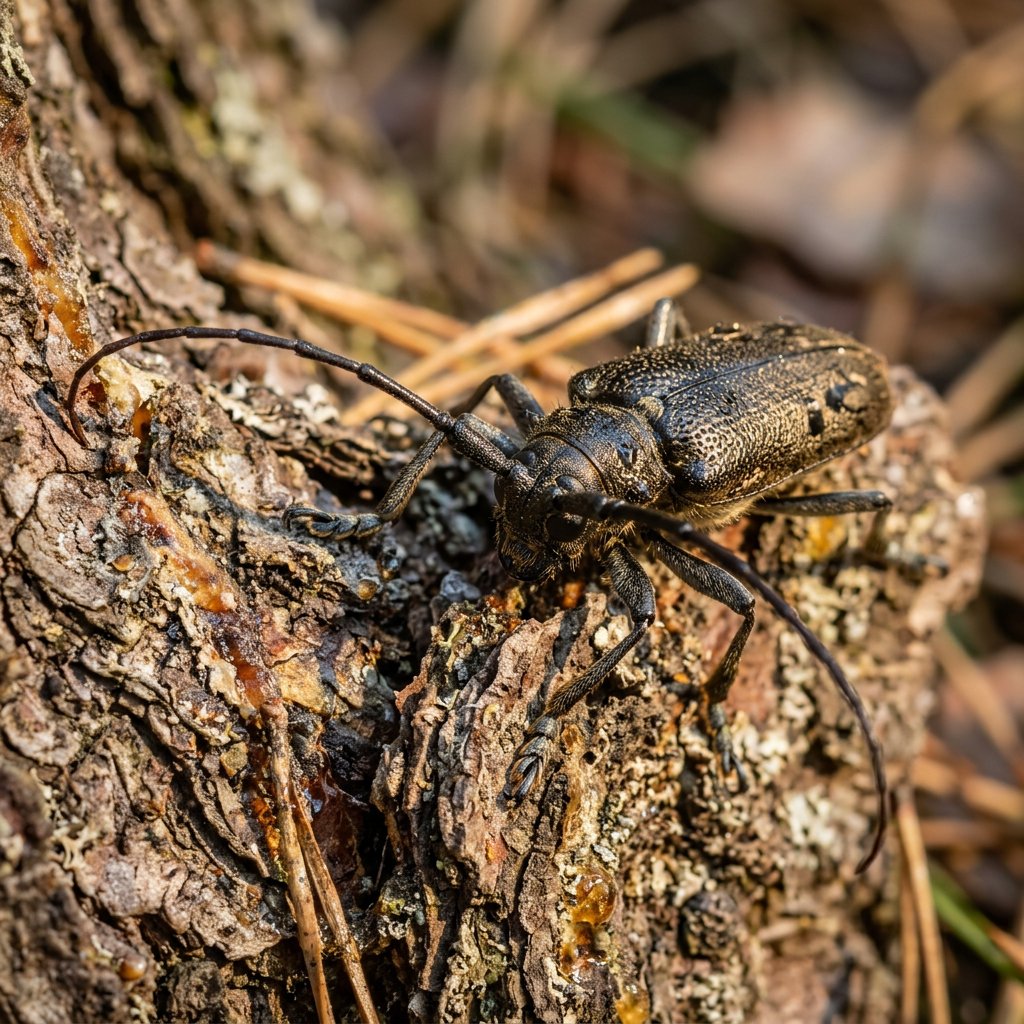
Often called the Black Pine Sawyer, this beetle is a titan of the pine woods. With antennae that can reach several times its body length, it looks like a miniature extraterrestrial scout navigating the forest canopy. While it might look intimidating due to its size and jerky movements, it plays a vital, albeit complicated, role in the life cycle of coniferous forests across Europe and North Africa.
🔍 How to Identify
- 📏 The "Longhorns": Its most striking feature is the antennae. In males, these can be more than double the body length, curving gracefully backward like long, segmented whips.
- ⚪ The Scutellum Spot: Look for a prominent, pale-colored (usually white or cream) triangular spot at the very top center of its back, right where the wing covers (elytra) meet the "shoulders."
- 🌑 Mottled Armor: The body is sturdy and cylindrical, ranging from deep brown to black. It is often dusted with irregular patches of light-colored hair that provide excellent camouflage against rough pine bark.
🌲 Habitat & Ecology
- 🪵 The Wood-Boring Life: This beetle is a specialist of the pine forest. The larvae spend their early lives tunneling deep into the wood of stressed, dying, or recently felled trees. This process helps break down dead timber, returning nutrients to the soil.
- 🪱 A Secret Hitchhiker: While the beetle itself is a natural forest recycler, it is famous in the forestry world for carrying the Pine Wood Nematode. These microscopic worms hitch a ride on the beetle to move from tree to tree, which can unfortunately lead to "Pine Wilt" disease in healthy forests.
⚠️ Safety & Toxicity
- 🛡️ Harmless but Strong: The Black Pine Sawyer is non-venomous and does not possess a stinger. It is generally a peaceful giant that would much rather fly away than engage with a human.
- 🤏 The Pinch Factor: Because they are designed to chew through solid wood, their mandibles (jaws) are quite powerful. If handled roughly, they may deliver a sharp pinch. To observe them safely, let them crawl onto a leaf or a stick rather than picking them up with your fingers.
- 🌲 Garden Alert: If you find these in your garden, it is usually a sign that a nearby pine tree is stressed or dying. They are drawn to the scent of "distress chemicals" released by trees in trouble.
✨ Fun Fact
These beetles are "scent-trackers" of the insect world. They can detect the specific chemical signals (volatiles) released by a pine tree that has been scorched by fire or damaged by a storm from over a mile away!
More Details








