Info
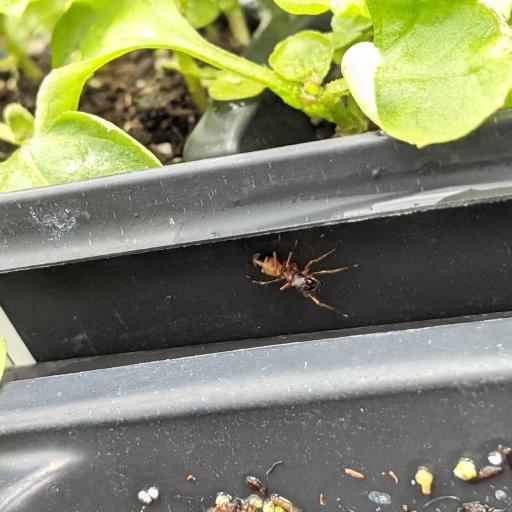
Meet the ultimate master of disguise: a spider that spent millions of years evolving to look exactly like an ant. Often called the Ant-mimicking Jumping Spider, Myrmarachne formicaria is a tiny illusionist that uses visual trickery to hide in plain sight. By mimicking the appearance and movements of an ant, it avoids being eaten by birds and wasps who find ants spicy or aggressive.
🔍 How to Identify
- 🐜 The "Wasp" Waist: Unlike most spiders that have a two-part round body, this spider has a constricted cephalothorax that creates the illusion of a three-part ant body.
- 🎭 Fake Antennae: It frequently waves its front pair of legs in the air to mimic the searching movement of an ant's antennae, effectively hiding its eight-legged nature.
- 👀 Jumping Spider Eyes: Despite its ant-like body, a close look reveals the two massive, forward-facing primary eyes characteristic of jumping spiders, giving it incredible 360-degree vision.
🌲 Habitat & Ecology
- 🌿 The Social Illusion: You’ll typically find them in low vegetation, leaf litter, or sunny garden patches, often scurrying near actual ant colonies to blend in with the crowd.
- 🦟 A Solitary Hunter: While it looks like a social ant, it is a solitary predator. It doesn't use webs to catch food; instead, it stalks its prey—usually small flies or other tiny insects—and pounces with precision.
⚠️ Safety & Toxicity
- ✅ Harmless Friend: This spider is entirely harmless to humans and larger pets. It is shy and will almost always choose to run away or "play ant" rather than bite.
- 🛡️ Non-Aggressive: Even if handled, their fangs are generally too small to pierce human skin, and their venom is only designed to subdue tiny insects. They are beneficial garden residents that help control pest populations.
✨ Fun Fact
To perfect its disguise, Myrmarachne formicaria doesn't just look like an ant; it walks like one! It moves in a zig-zag pattern and pauses frequently to tap the ground with its front legs, mimicking the pheromone-tracking behavior of a real ant.
More Details








