Info
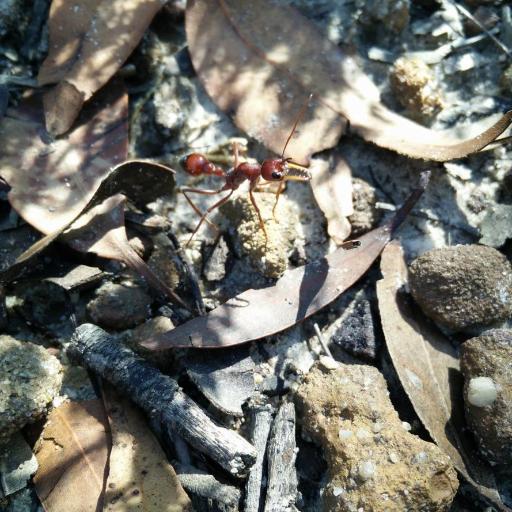
Often called the Red Bull Ant or "Bulldog Ant," this Australian native is a formidable living fossil. Known for its incredible size and fierce temperament, it is one of the most primitive ant species on Earth. Unlike typical ants that scurry away when noticed, the Bull Ant will often stand its ground, using its exceptional vision to track your movements.
🔍 How to Identify
- ⚔️ Giant Mandibles: They possess long, straight, and serrated jaws that extend forward, used to grip prey with a vice-like hold.
- 👁️ Large Compound Eyes: Unlike most ants that rely on scent, these have massive eyes that allow them to spot and track movement from over a meter away.
- 📏 Impressive Scale: They are giants of the ant world, often reaching lengths of 15 to 30mm, with a distinct reddish-brown or orange-black body.
🌲 Habitat & Ecology
- 🦂 The Lone Hunter: While they live in complex underground colonies, you will usually see them hunting alone. They are skilled predators that take down spiders and other insects, though the adults primarily feed on nectar.
- 🏗️ Hidden Fortresses: Their nests are usually found in sandy soil or under rocks, marked by a simple hole. Don't be fooled by the modest entrance; the tunnels can extend deep into the earth and are guarded by aggressive "sentinel" ants.
⚠️ Safety & Toxicity
- 🚫 High Risk: Approach with extreme caution. The Red Bull Ant is famous for its "double trouble" attack: it grips the skin with its powerful jaws and then repeatedly curls its abdomen to drive a potent stinger into the victim.
- 🚑 Medical Concern: The venom is extremely painful and can cause localized swelling and redness for days. In sensitive individuals, pets, or children, a sting can trigger a life-threatening allergic reaction (anaphylaxis). If you see a nest, give it a wide berth.
✨ Fun Fact
The Myrmecia gulosa has such advanced eyesight that it can distinguish between different people and can actually follow you with its head as you walk past its nest!
More Details








