Info
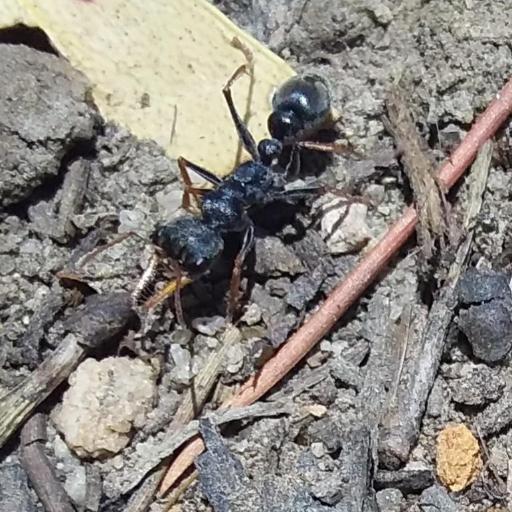
Known commonly as the Jack Jumper Ant or "Hopper Ant," this Australian native is famous for its incredible athleticism and bold, feisty personality. Unlike most ants that crawl steadily in lines, these little dynamos literally hop toward their targets with surprising speed. While they are a fascinating marvel of evolution, they are legendary in Tasmania and coastal Australia for being one of the most formidable insects in the bush.
🔍 How to Identify
- 🎨 Golden Tips: Look for a sleek, black body contrasted sharply by bright yellow or orange-tipped mandibles and lower legs.
- 👀 Large Eyes: They possess massive, multifaceted eyes that provide excellent vision, allowing them to track movement from several feet away.
- 🦘 The "Hop": Their movement is unmistakable; when disturbed or hunting, they use their powerful legs to jump several inches, a rare trait among ant species.
🌲 Habitat & Ecology
- 🐜 Solitary Hunters: While they live in underground colonies, you will often see them hunting alone. They are generalist predators, feeding on other insects and sweet nectar, playing a vital role in controlling pest populations.
- 🏜️ The Hidden Nest: Their nests are often inconspicuous, hidden under rocks or decorated with small pebbles and charcoal, which help absorb heat from the sun to warm the larvae below.
⚠️ Safety & Toxicity
- 🚨 High Risk: The Jack Jumper is one of the most dangerous ants in the world. Their sting is intensely painful and contains a potent venom that can cause severe allergic reactions.
- 🚑 Anaphylaxis Warning: In certain regions of Australia, they are responsible for more cases of anaphylaxis than honeybee stings. If you are stung and experience swelling, difficulty breathing, or dizziness, seek emergency medical attention immediately. Keep pets and children away from visible nests.
✨ Fun Fact
The Jack Jumper Ant holds a world record in the world of genetics! The females of this species have the simplest possible genetic structure of any multicellular animal, possessing only a single pair of chromosomes.
More Details








