Info
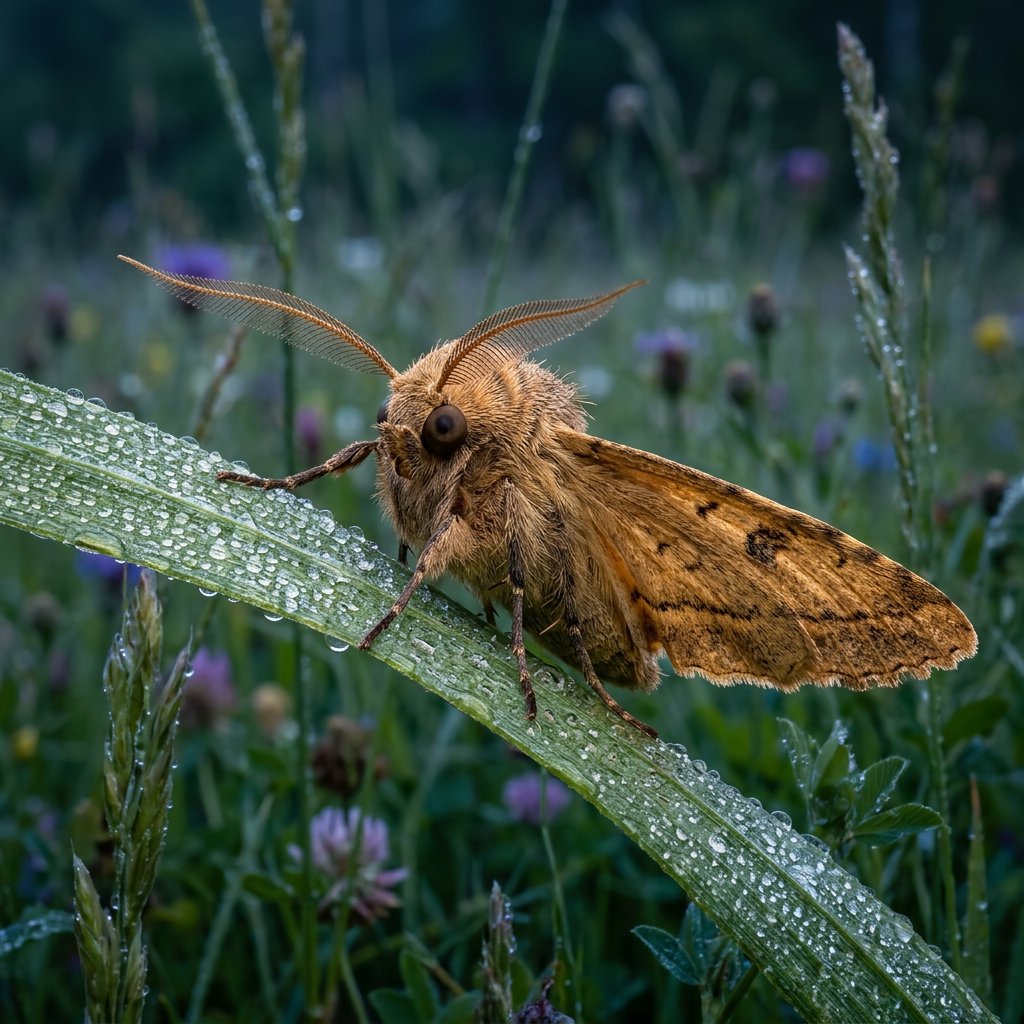
Often called the Double Line, this moth is a subtle beauty of the night. With its warm, foxy-colored wings, it looks more like a dried leaf than a living insect when resting amongst forest floor debris. While many see moths as pests, this species is a neutral garden visitor that plays its part in the local ecosystem without ever bothering your pantry or your clothes.
🔍 How to Identify
- 🎨 Forewings: The wings are a rich tawny to reddish-brown, marked by two very distinct, dark transverse lines that run across the wing surface.
- ⚪ The White Dot: A tiny, sharp white or pale kidney-shaped spot sits right in the center of the forewing, acting as a clear diagnostic mark.
- 🧥 Furry Thorax: Like many members of its family, it has a "fuzzy" or hairy-looking upper body (thorax), which helps it retain heat during cooler evening flights.
🌲 Habitat & Ecology
- 🌾 Grassland Specialist: You’ll most likely spot this moth near damp meadows, marshes, or woodland clearings. Its life cycle is deeply tied to the ground, where the caterpillars feed on various wild grasses like Cocks-foot and Wood Melick.
- 🌙 Night Owl: They are strictly nocturnal. If you have a bright porch light or a "moth trap" (a hobbyist's light setup), you might see them fluttering by between June and July. They are also known to visit "sugar patches"—fermented fruit or bait left out by researchers.
⚠️ Safety & Toxicity
- ✅ Harmless Observer: The Double Line moth is completely harmless to humans and pets. It does not bite, sting, or possess any irritating hairs.
- 🌿 Garden Impact: Unlike the "Cutworms" or "Clothes Moths" that people fear, the Double Line larvae prefer wild, unmanaged grasses. This means they won't decimate your vegetable patch or your prized ornamental flowers.
✨ Fun Fact
📜 Textile Tones: The species name turca is thought to be a historical reference to "Turkish" influence, likely because the moth’s rich, earthy red and gold colors resembled the ornate patterns of traditional rugs or textiles imported from the East during the 18th century.
More Details








