Info
Often called the European Grain Moth or the Corn Moth, this tiny aviator is a master of camouflage within the pantry and the woodland alike. While it might look like a harmless speck of dust, it has a long history as a "pantry pirate," often hitchhiking into homes through birdseed, dried fruit, or even vintage wine collections. In the wild, it plays a more helpful role, cleaning up decaying wood and forest fungi.
🔍 How to Identify
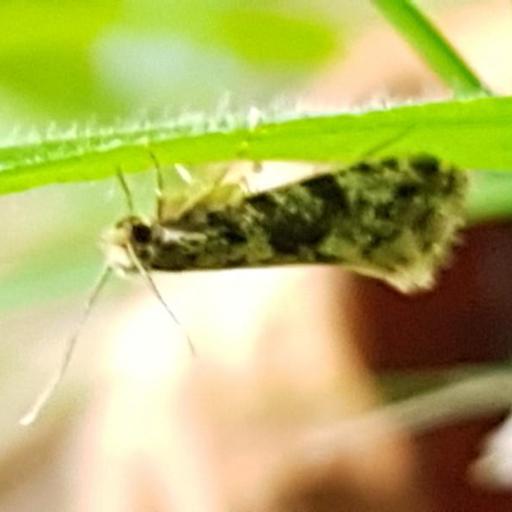
- 🦋 Wing Pattern: The forewings are a complex mosaic of creamy white, mottled with irregular dark brown and blackish spots. When resting, it looks like a tiny piece of bird dropping or lichen.
- 🌾 The Fringes: If you look closely at the trailing edges of the wings, you’ll see delicate, hair-like fringes that give the moth a soft, blurred silhouette.
- 🐛 The Larvae: The "caterpillar" stage is a small, creamy-white larva with a distinct reddish-brown head. They are often found tucked away inside silken tubes they spin within their food source.
🌲 Habitat & Ecology
- 🍞 The Scavenger's Diet: This moth is a generalist "foe" in the kitchen. It feeds on stored grains, flour, dried mushrooms, and legumes. However, it is most famous among collectors for its love of natural wine corks, where it can bore deep into the wood to pupate.
- 🍄 Forest Role: Outside of human dwellings, it is a dedicated recycler. It is frequently found inhabiting bracket fungi (shelf mushrooms) growing on old trees and rotting logs, helping to break down tough organic matter back into the soil.
⚠️ Safety & Toxicity
- 🛡️ Status: Completely harmless to humans and pets in terms of physical contact. They do not bite, sting, or produce any known toxins.
- 📦 Contamination: The "danger" is purely economic and hygienic. Because the larvae leave behind silk webbing and waste (frass) in food products, an infestation can lead to mold and spoilage. Always seal your grains in airtight glass or plastic containers to keep them out.
✨ Fun Fact
This moth is a legendary nuisance in European wine caves. It is one of the few insects capable of eating through wine corks while the bottles are still in the rack, earning it the nickname "The Cork Moth." Traditional cellars sometimes used "cellar cats" or specific ventilation to keep these tiny cork-borers away from expensive vintages!
More Details








