Info
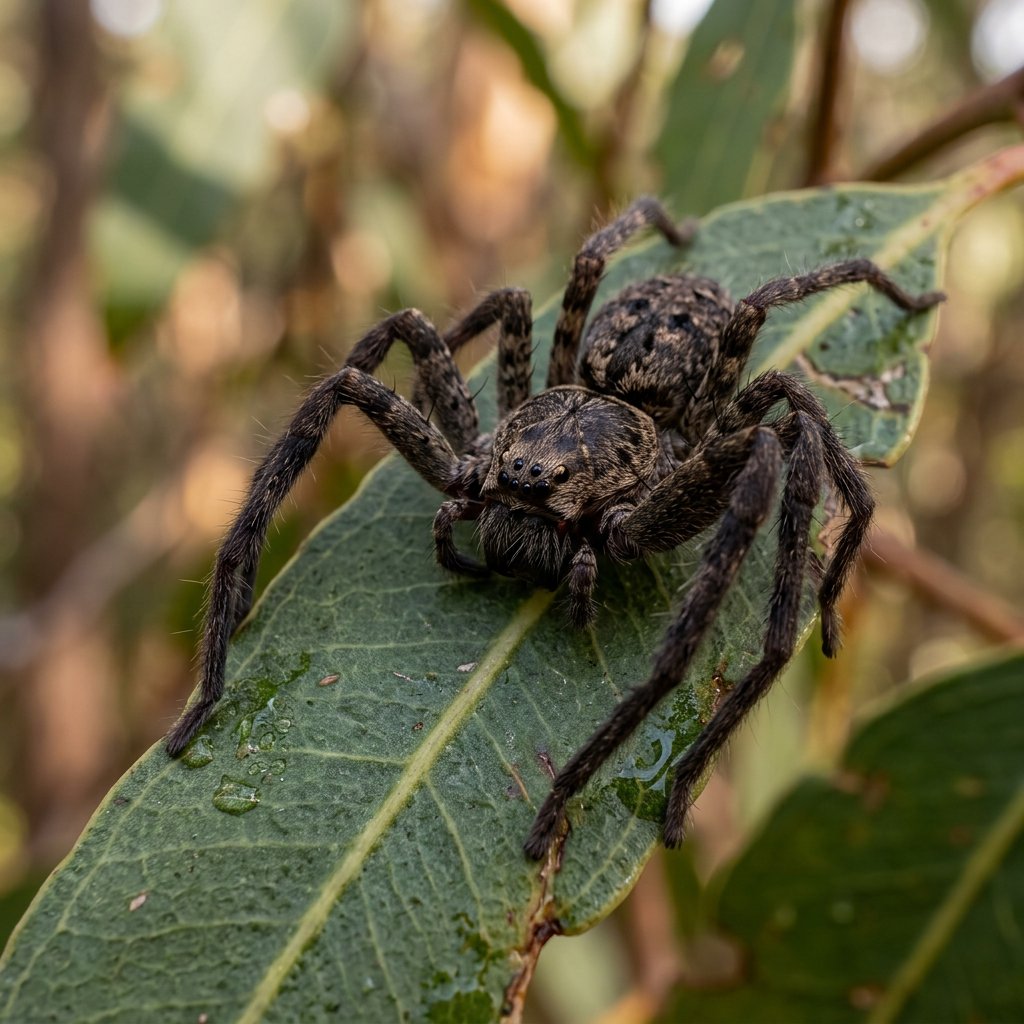
Commonly known as the Badge Huntsman Spider, this leggy Australian native is often mistaken for a scary intruder. While its impressive speed and size can be startling, it is actually a beneficial "free pest control" agent for your home. In local lore, having a huntsman in the house is often seen as a sign that you won't have to worry about cockroaches or silverfish.
🔍 How to Identify
- 🛡️ The "Badge": Its most famous feature is a striking, colorful shield-like pattern on the underside of its abdomen, usually featuring splashes of black, white, orange, or yellow.
- 🕷️ Velvety Coat: The body is covered in fine, downy hairs and typically appears in camouflaged shades of sandy brown, buff, or grayish-tan.
- 🦵 Crab-like Stance: Like all huntsman spiders, its legs are jointed in a way that allows it to scuttle sideways and squeeze into incredibly flat crevices.
🌲 Habitat & Ecology
- 🍂 Master of Hiding: In the wild, they prefer the tight spaces behind loose tree bark or under flat rocks. In residential areas, they may wander indoors seeking shelter during heatwaves or heavy rain.
- 🦟 Active Hunter: They do not spin webs to catch food. Instead, they are nocturnal ambush predators that rely on their incredible eyesight and vibrations to track down and sprint after their prey.
⚠️ Safety & Toxicity
- 🛑 Status: Venomous, but not considered life-threatening to humans. They are generally shy and prefer to run away rather than fight.
- 🤚 Details: If provoked or handled roughly, they may bite. The bite is locally painful and can cause swelling or mild nausea, but it is not medically significant for most healthy adults.
- 🐾 Pets: While not deadly, a bite can be very distressing for small dogs or cats. It is best to relocate the spider using the "cup and paper" method if it enters a pet's territory.
✨ Fun Fact
The Badge Huntsman is a world-class sprinter! It is capable of moving up to one yard per second, which, relative to its body size, makes it one of the fastest spiders on the planet.
More Details








