Info
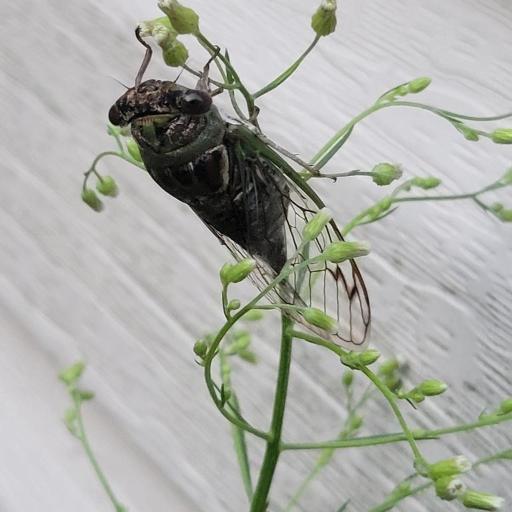
Often called the "Southeastern Dog-day Cicada," this insect is the invisible drummer of the late summer heat. Named after the renowned entomologist William T. Davis, these cicadas are famous for their high-pitched, rhythmic buzzing that defines humid August afternoons. While they might look like giant flies or "scary" beetles, they are actually harmless musicians who spend most of their lives tucked away underground.
🔍 How to Identify
- 🎨 The Camouflage: Their bodies are a beautiful mosaic of "camouflage" colors—typically a mix of forest green, rusty brown, and deep black markings on the thorax.
- 🔎 The "W" Pattern: If you look closely at the back of the thorax (the middle section), you can often spot a distinct dark pattern that looks like a distorted letter "W" or "M."
- Clear Sturdy Wings: They possess large, transparent wings with prominent veins. In this species, the vein along the leading edge of the wing is usually a bright, leafy green.
- 👁️ Wide-Set Eyes: Like most cicadas, they have large, bulging compound eyes set far apart on the sides of their heads, giving them a wide field of vision to spot predators.
🌲 Habitat & Ecology
- 🌳 Tree Dwellers: You are most likely to find them in deciduous forests or suburban backyards with plenty of hardwood trees. They prefer to perch high in the canopy, making them much easier to hear than to see.
- 🎶 The Summer Song: Only the males sing, using special vibrating organs called "tymbals" located on their abdomens. Their song is a steady, pulsating drone that rises in pitch and then tapers off, used specifically to attract mates during the "dog days" of summer.
- 🧃 Sap Sippers: Contrary to popular belief, they don't eat leaves or garden plants. Instead, they use a straw-like mouthpart to sip xylem (sap) from tree branches, causing negligible damage to healthy trees.
⚠️ Safety & Toxicity
- ✅ Harmless Giant: Despite their large size and loud noise, they are completely "friend." They do not possess a stinger, and they do not have teeth to bite humans or pets.
- 🔊 The Buzz Reflex: If you pick one up, it may vibrate its body rapidly or let out a "protest" squawk. This can feel like a small electric shock or a tickle, but it is just a defense mechanism to scare off birds and curious hands.
✨ Fun Fact
Though we see them for only a few weeks in the summer, Neotibicen davisi nymphs actually live underground for 2 to 3 years! They stay buried in the soil, tunneled near tree roots, waiting for the perfect temperature to emerge, shed their skins, and begin their short, musical adult lives.
More Details








