Info
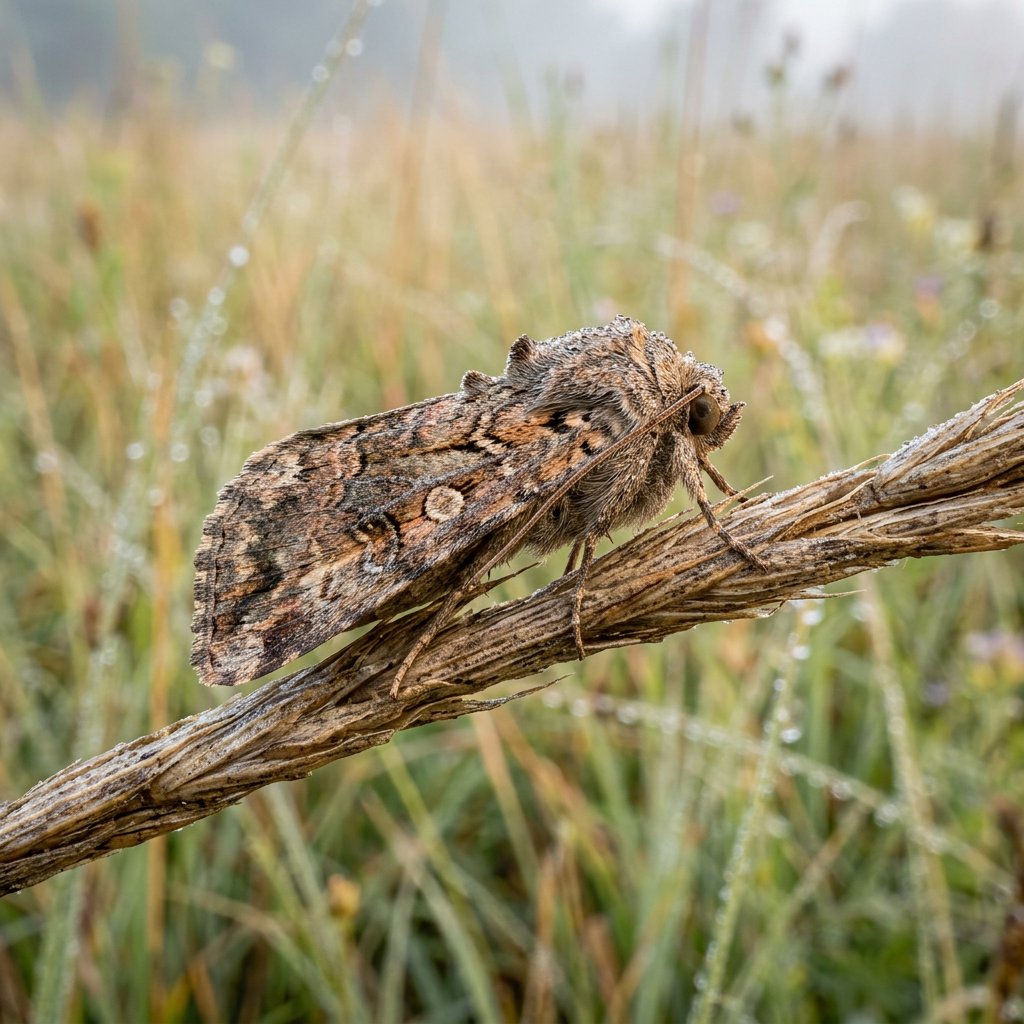
Often called the Bronzed Cutworm, this moth is a common visitor to North American meadows and backyards in late summer. While the adult moth looks like a sophisticated piece of burnished copper, its larval form is a legendary "clipper" of grasses. It is generally a "foe" to perfect lawns but a vital "friend" to the local ecosystem, providing a high-protein snack for migrating birds and hungry bats.
🔍 How to Identify
- 🦋 The Wings: The forewings are a rich, deep reddish-brown or "bronze" color with a subtle metallic sheen that glints under a flashlight.
- 🖌️ Distinctive Markings: Look for a pale, kidney-shaped spot (the reniform spot) and a smaller circular spot near the center of each wing.
- 🧶 Robust Build: They have very stout, hairy bodies and a "furry" thorax that looks like they are wearing a tiny, stylish winter coat.
🌲 Habitat & Ecology
- 🌾 The "Cutworm" Habit: The name comes from the caterpillar’s behavior; they hide in the soil during the day and emerge at night to "cut" through the stems of grasses and seedlings at ground level.
- 🌙 Nocturnal Life: As adults, they are strictly active at night. They are famously "phototactic," meaning they are highly attracted to porch lights and glowing windows during the autumn months.
- 🍂 Seasonal Timing: You will mostly see the winged adults flying from August through October, acting as one of the last flurries of moth activity before the frost sets in.
⚠️ Safety & Toxicity
- 🛡️ Completely Harmless: The Bronzed Cutworm does not bite, sting, or carry any venom. They are safe for curious children to observe closely.
- 🐾 Pet Safety: They are non-toxic to cats and dogs. However, like most moths, they are covered in tiny scales that look like dust; if a pet tries to eat one, the "dust" might cause minor temporary coughing or sneezing.
✨ Fun Fact
The Bronzed Cutworm is a true winter survivor! While many insects die off or hibernate as eggs, these caterpillars often hatch in the fall and spend the winter tucked under leaf litter, sometimes even crawling across the snow on warmer winter days.
More Details








