Info
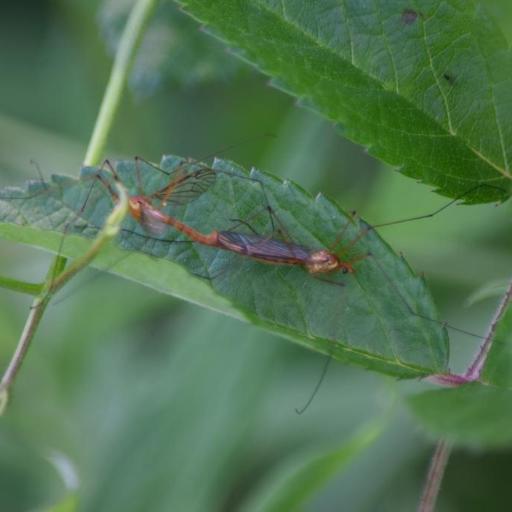
Known for its vibrant, rusty-orange hue, the Ferruginous Crane Fly is a frequent summer visitor to gardens and porches across North America. While its spindly legs and erratic flight might look intimidating to some, this "Gollywhopper" is a gentle giant of the insect world. Often mistaken for a giant mosquito, it is actually a harmless nectar-sipper that plays a vital role in the ecosystem's nutrient cycle as a decomposer.
🔍 How to Identify
- 🟠 The "Rusty" Hue: Its most striking feature is its polished, reddish-orange or "ferruginous" body, which sets it apart from its more common, drab-brown relatives.
- 📏 Stilt-like Legs: It possesses incredibly long, fragile legs that are often several times the length of its body, giving it a clumsy but elegant silhouette.
- ✔️ The V-Suture: Like other crane flies, it features a distinct V-shaped groove on the top of its thorax (the middle section), which is a key diagnostic feature for the family.
🌲 Habitat & Ecology
- 🌿 Garden Life: You will often find them bobbing over lawns or resting on tall blades of grass near damp areas. They prefer moist soil where their larvae, known as "leatherjackets," live underground and feed on decaying organic matter.
- 💡 Night Owls: These insects are highly attracted to artificial lights. If one ends up in your house, it’s likely because it was confused by a porch light or an open window while searching for a mate at dusk.
- 🦋 Brief Lifespan: As adults, they live for only a few days. Their primary mission is reproduction, and many individuals do not even eat during their adult stage, though some may sip a little nectar for energy.
⚠️ Safety & Toxicity
- ✅ Completely Harmless: Despite the scary nicknames like "Mosquito Hawk," these flies do not bite, sting, or carry diseases. They lack the mouthparts necessary to pierce human skin.
- 🐾 Pet & Child Safe: They are entirely non-toxic. If a curious cat or dog catches one, there is no cause for alarm—though the fly’s fragile legs are likely to fall off during the encounter!
✨ Fun Fact
If a predator grabs a Ferruginous Crane Fly by the leg, the insect can intentionally "drop" the limb to make a quick getaway. This process is called autotomy. While it doesn't hurt the fly, they cannot regrow their legs, so you will often see older individuals hopping around on only four or five stilts!
More Details








