Info
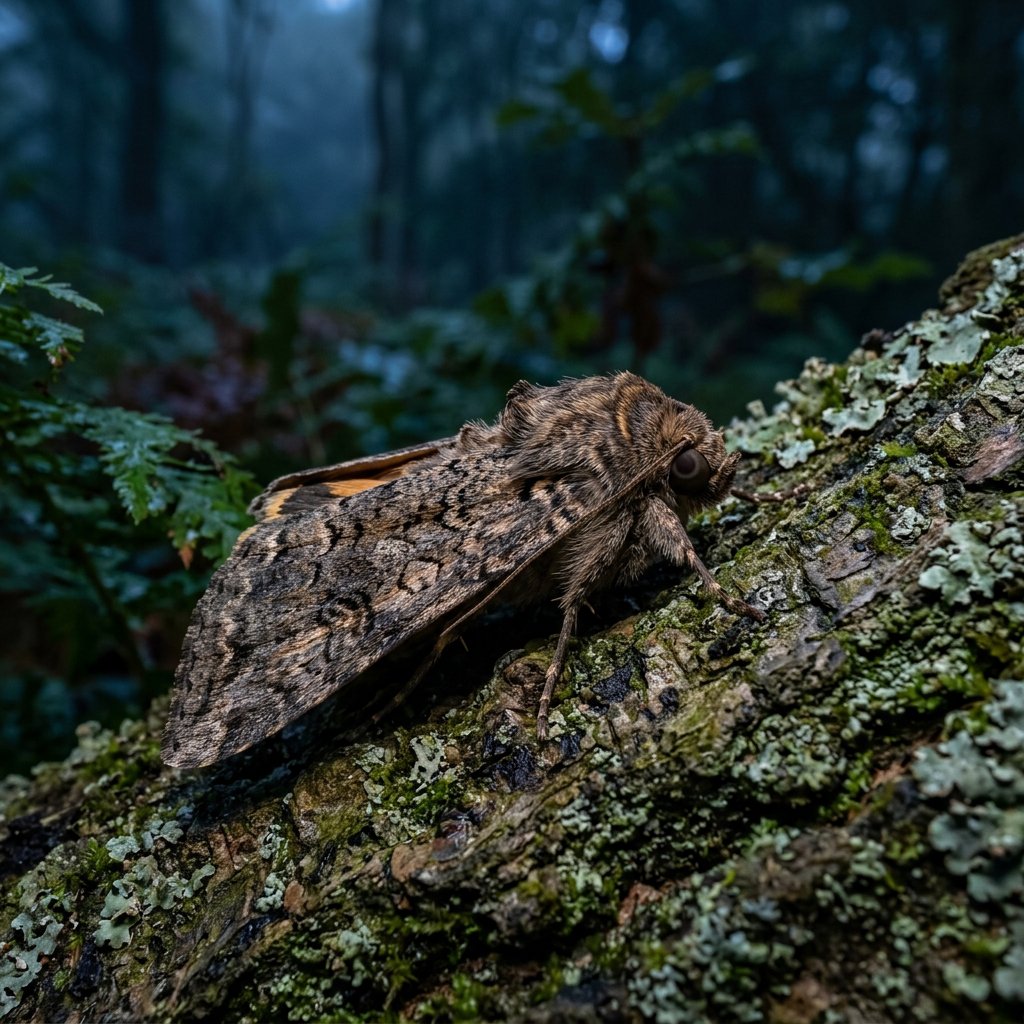
Known as the Large Yellow Underwing, this moth is a master of disguise and a staple of summer nights. While its resting face is a dull, bark-like brown, it hides a vibrant secret beneath its wings to startle would-be predators. It is one of the most common moths found fluttering around porch lights or hiding in the cool shade of garden foliage during the day.
🔍 How to Identify
- 🦋 Forewings: These are highly variable in color, ranging from clay-brown to deep grayish-purple. They are designed to mimic bark or dried leaves, allowing the moth to vanish against a tree trunk.
- 🟡 Hindwings: The "surprise" feature. When the moth takes flight, it reveals bright, sunshine-yellow hindwings marked with a distinct black band near the outer edge.
- 📏 Body Shape: It has a thick, furry thorax and a robust, "chunky" appearance. When at rest, the wings overlap flat across its back, creating a narrow, streamlined silhouette.
🌲 Habitat & Ecology
- 🌙 Nighttime Navigator: As a nocturnal species, it spends its nights visiting flowers like Buddleia (Butterfly Bush) and Ragwort for nectar. It is a generalist, meaning it can thrive in almost any environment from wild meadows to tidy suburban backyards.
- 🐛 The "Cutworm" Habit: While the adult moth is a harmless visitor, its caterpillar is known to gardeners as a "cutworm." These larvae live in the soil and emerge at night to feed on the stems of young plants, often "cutting" them down at the base.
- 🏠 Common Houseguest: Because they are highly attracted to artificial light, they frequently find their way into homes. They are fast, erratic fliers that can be quite noisy when bumping against a lampshade.
⚠️ Safety & Toxicity
- ✅ Status: Completely Harmless.
- ✋ Details: These moths do not bite, sting, or carry diseases. The "dust" that comes off their wings if handled is actually tiny scales; while it may be slightly irritating to people with extreme respiratory sensitivities, it is non-toxic to humans, cats, and dogs.
✨ Fun Fact
The Large Yellow Underwing uses a survival tactic called "Flash Coloration." When a predator like a bird spots the moth, the moth suddenly flies away, revealing its bright yellow wings. The sudden burst of color startles the bird for a split second—just long enough for the moth to dive into the grass and vanish as it folds its wings back into "camo mode."
More Details








