Info
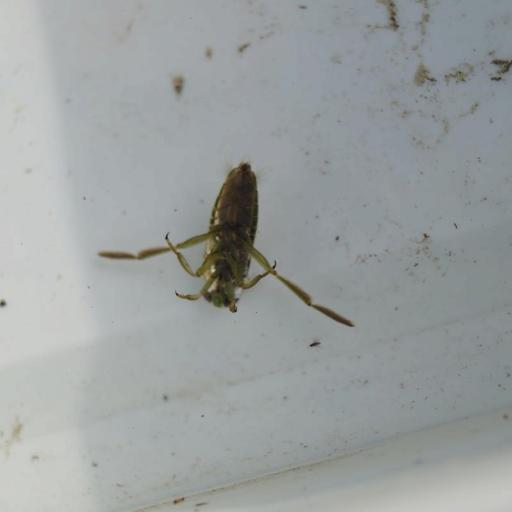
The Green Backswimmer, often called the "Water Wasp," is a fascinating aquatic architect that spends its life viewing the world from an upside-down perspective. Found gliding through still ponds and garden water features, this true bug is a master of camouflage and a highly efficient predator. While it might look like a harmless floating leaf, it is actually one of the most athletic hunters in the miniature world of the pond.
🔍 How to Identify
- 🛶 The "Oars": Its hind legs are significantly longer than the others and are fringed with fine hairs, acting exactly like oars to propel it through the water.
- 🙃 Upside-Down Body: It is most easily recognized by its habit of swimming on its back. Its belly is darker than its topside—the opposite of most animals—to keep it hidden from predators looking both up and down.
- 🎨 Coloration: As the name viridis suggests, it has a distinct pale green or yellowish-green hue on its wing cases, helping it blend into aquatic vegetation.
🌲 Habitat & Ecology
- 💧 The Scuba Diver: To breathe underwater, it traps a silvery bubble of air against its body using tiny hairs. This "living scuba tank" allows it to stay submerged for long periods while waiting for prey.
- 🦟 The Pond Protector: These insects are excellent for garden health as they are voracious predators of mosquito larvae, small crustaceans, and even tiny tadpoles, keeping the pond ecosystem in balance.
- ✈️ Nighttime Flyers: Despite being aquatic, they have fully functional wings. If their pond dries up or they seek a new mate, they will climb out of the water at night and fly to a new location, often attracted by artificial garden lights.
⚠️ Safety & Toxicity
- 🐝 Status: Defensive "Water Wasp" bite.
- 🚫 Details: While not venomous in a traditional sense, they can deliver a sharp, painful poke with their proboscis if handled or trapped against the skin (like inside a swimsuit). The sensation is often compared to a bee sting, causing localized redness and stinging, but it is generally harmless to humans and pets.
✨ Fun Fact
Backswimmers use polarized light to find new bodies of water. Unfortunately, this means they sometimes mistake shiny car roofs or glass garden tables for deep ponds and will "crash land" on them during their nighttime flights!
More Details








