Info
Often appearing in sudden, massive waves, the California Tortoiseshell is a resilient wanderer of the Western United States. Known for its "boom-or-bust" cycles, this butterfly can go from nearly invisible to ubiquitous in a single season, sometimes swarming mountain passes in fluttering orange clouds that stop traffic. It is a master of survival, built to withstand the rugged conditions of high-altitude forests and brushlands.
🔍 How to Identify
- 🦋 Wing Coloration: The upper side features a rich, tawny orange base decorated with bold black spots and a thick, dark brown or black border.
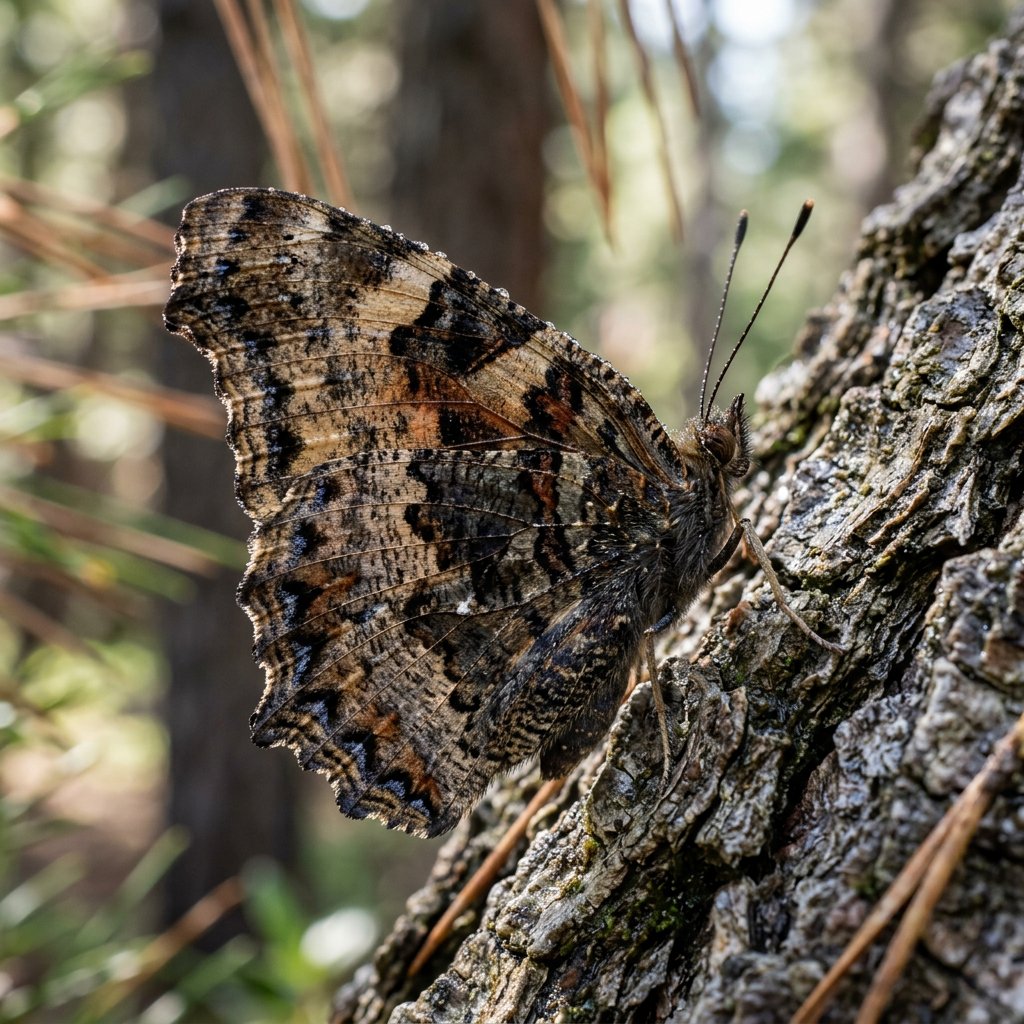
- 🍂 Master of Disguise: When its wings are closed, the underside reveals a dark, mottled, bark-like pattern that allows the butterfly to vanish completely against a tree trunk or dried leaf.
- 📏 Wing Shape: The edges of the wings are "scalloped" or irregular, giving it a rugged, leaf-like silhouette rather than a smooth, rounded appearance.
🌲 Habitat & Ecology
- 🌿 The Lilac Connection: This butterfly is a specialist; its caterpillars feed almost exclusively on species of Ceanothus (commonly known as California Lilac or Buckbrush), making it a common sight in chaparral and mountain slopes.
- 🥤 Eclectic Diet: While they visit flowers for nectar, adults are frequently seen "puddling"—gathering on damp soil or mud to drink mineral-rich water—and will even feed on tree sap or rotting fruit.
⚠️ Safety & Toxicity
- ✅ Harmless Neighbor: The California Tortoiseshell is entirely safe for humans and pets. It possesses no sting, no bite, and is not known to be toxic if accidentally ingested by a curious dog or cat.
- 👐 Fragile Scales: Like all members of the Nymphalidae family, their wings are covered in microscopic scales that provide color and protection; touching them can rub these scales off and hinder the insect's ability to fly or regulate temperature.
✨ Fun Fact
❄️ The Long Sleep: While many butterflies live for only a few weeks, the California Tortoiseshell is a marathon runner of the insect world. It hibernates as a fully grown adult, tucked away in bark crevices or woodpiles, allowing it to emerge and fly on the very first warm days of late winter or early spring.
More Details








