Info
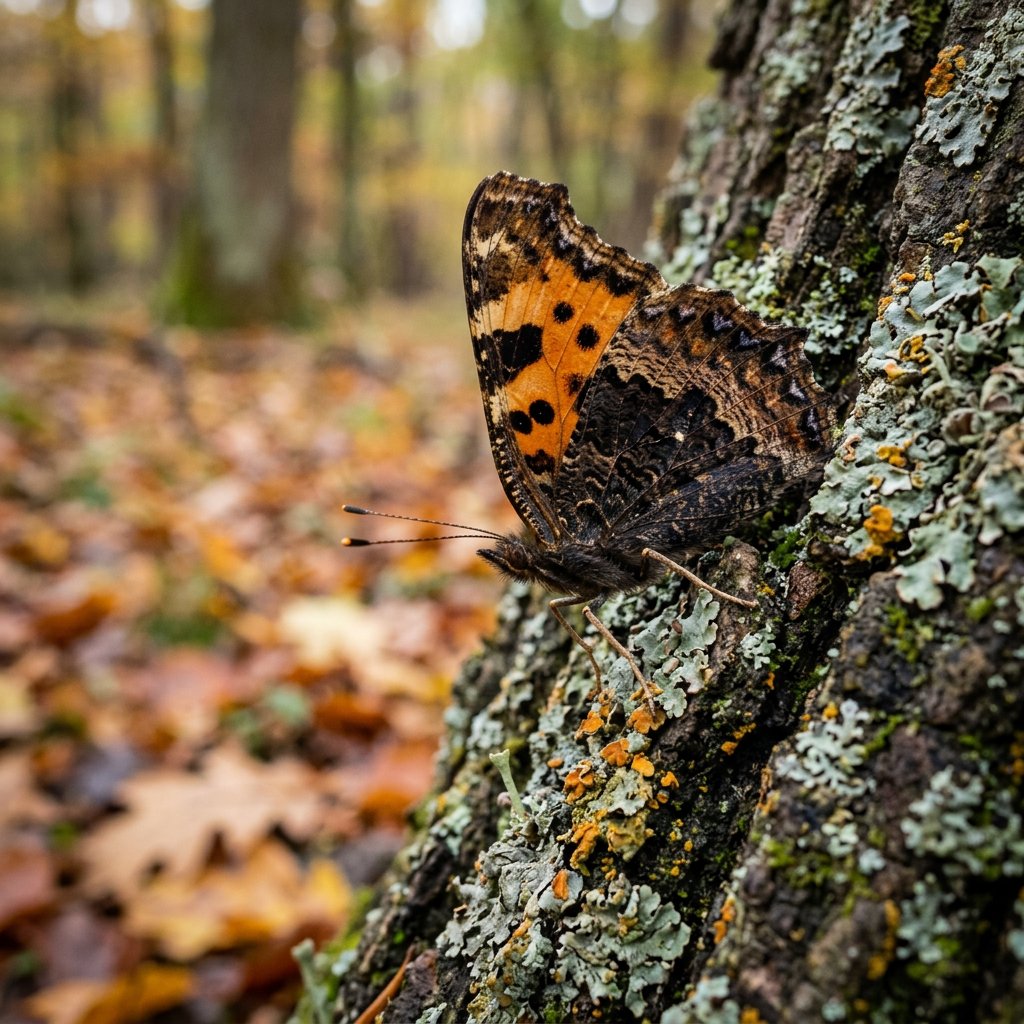
Known as the Large Tortoiseshell, this butterfly is a master of camouflage and a resilient survivor of the woodland canopy. Often mistaken for its smaller, more common cousin, this "friend" of the forest was once thought to be extinct in certain regions, only to make a dramatic and mysterious comeback. It is a robust flier and a herald of the changing seasons.
🔍 How to Identify
- 🦋 The Wingspan: It is significantly larger and more powerful than the Small Tortoiseshell, with a wingspan that can reach up to 75mm.
- 🎨 Upper Wing Pattern: The wings feature a rich, tawny orange base decorated with large, distinct black blotches and a dark, rugged outer margin.
- 🍂 Leaf Mimicry: The undersides of the wings are a mottled, dusky brown. When the butterfly closes its wings, it becomes virtually invisible, perfectly mimicking a shriveled dead leaf.
🌲 Habitat & Ecology
- 🌳 Tree Lovers: Unlike many butterflies that frequent low-lying flower gardens, the Large Tortoiseshell spends much of its time in the treetops. It relies heavily on Elms, Willows, and Poplars as host plants for its caterpillars.
- 🍎 Sips and Sweets: You are more likely to find this butterfly feeding on fermenting fruit or mineral-rich tree sap than on garden flowers. It plays a vital role in the woodland ecosystem as a consumer of overripe organic matter and a prey source for birds.
⚠️ Safety & Toxicity
- 🛡️ Status: Completely harmless to humans, children, and pets.
- 🦋 Non-Aggressive: It has no stinger or biting mandibles. Its only defense is its "disappearing act" through camouflage and its incredibly fast, erratic flight patterns when startled.
✨ Fun Fact
The Large Tortoiseshell is a "winter sleeper." It spends the coldest months of the year hibernating as a fully grown adult, often hiding in hollow trees or woodpiles, emerging on the very first warm days of spring to find a mate.
More Details








