Info
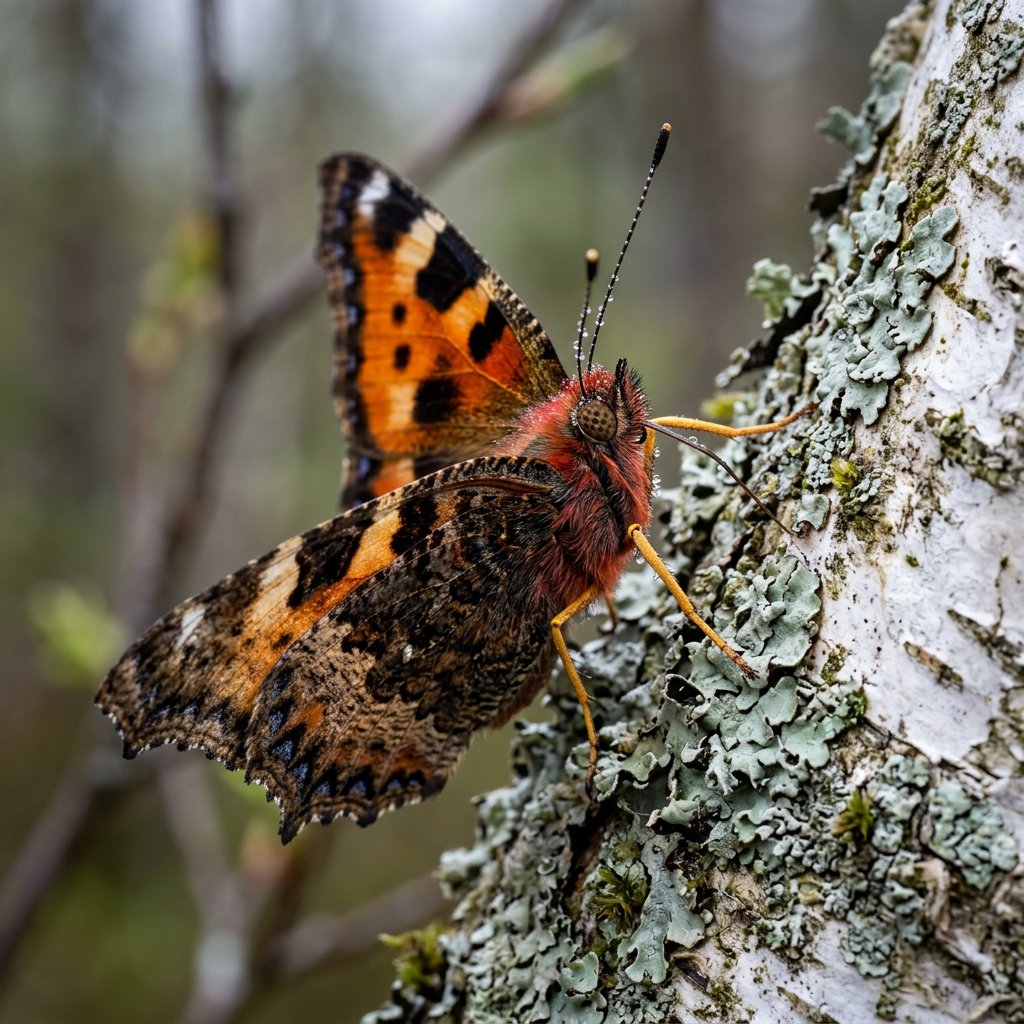
Often called the Scarce Tortoiseshell or Yellow-legged Tortoiseshell, this butterfly is a master of disguise. With wings that resemble jagged, burnt-orange parchment, it looks more like a wandering autumn leaf than a delicate insect. It is a rare and welcome sight for nature lovers, signaling a healthy woodland ecosystem nearby.
🔍 How to Identify
- 🦋 Wing Pattern: The upper wings are a vibrant tawny-orange, decorated with large, irregular black blotches and a row of faint blue crescents along the dark outer margins.
- 🦵 The "Yellow" Legs: Its scientific name, xanthomelas, literally means "yellow and black." Unlike its dark-legged cousins, this species is easily identified by its pale, yellowish-buff legs.
- 🍂 Rugged Silhouette: When resting with its wings closed, the underside is a dull, mottled brown. The deeply scalloped and "torn" edges of the wings provide perfect camouflage against tree bark.
🌲 Habitat & Ecology
- 🌳 The Willow Connection: These butterflies are primarily found near riverbanks and forest edges. Their caterpillars are social creatures, living in communal webs on the branches of Willows (Salix) and occasionally Poplars or Elms.
- 🧭 Nomadic Travelers: They are strong fliers and are known for their migratory behavior. They don't just stay in one garden; they wander across large territories, often appearing in unexpected regions during warm summers.
⚠️ Safety & Toxicity
- ✅ A Gentle Friend: The Scarce Tortoiseshell is completely harmless. It does not bite, sting, or possess any chemical defenses that could hurt humans.
- 🐛 Spiny but Safe: While the caterpillars are covered in black, branched spines that might look intimidating to predators, they are not toxic or irritating to human skin if accidentally touched.
✨ Fun Fact
Unlike many butterflies that live for only a few weeks, the Scarce Tortoiseshell is a long-lived "overwinterer." It spends the freezing winter months as a fully grown adult, hiding in hollow trees or woodsheds, and emerges on the very first sunny days of early spring to feed on willow catkins!
More Details








