Info
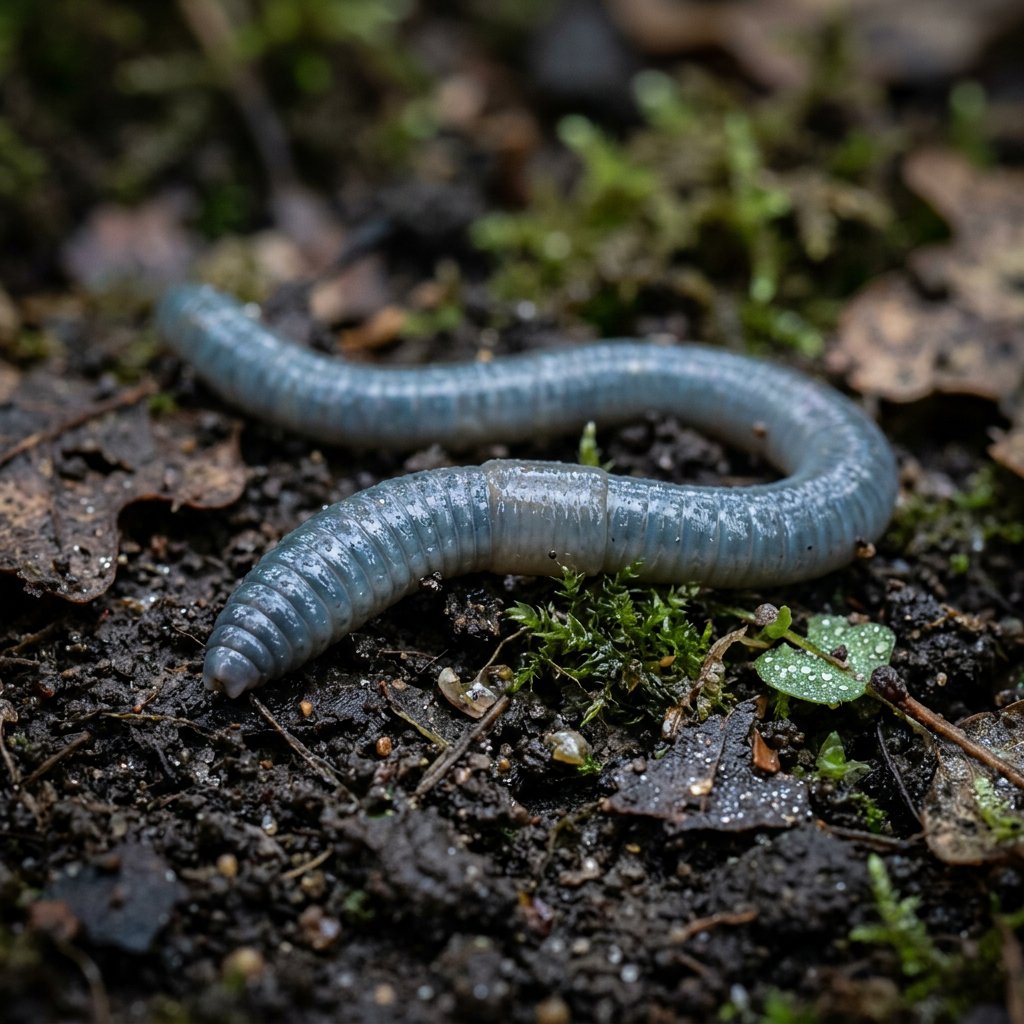
Known as the Blue-grey Earthworm, this subterranean architect is a silent hero of the soil. While it belongs to the annelid family rather than being a true insect, it is one of the most distinctive "creepy crawlies" you’ll find beneath your garden's surface. With its ghostly, pale complexion and peaceful nature, it spends its life deep underground, turning ordinary dirt into nutrient-rich soil.
🔍 How to Identify
- 🎨 Ghostly Coloration: Unlike the common pink or dark red earthworm, this species is a striking pale blue, milky grey, or even a translucent white.
- 🟨 The Yellow Tip: One of its most reliable identifiers is the very last segment of its tail, which is often a bright, contrasting yellow or orange-buff color.
- 📐 Octagonal Tail: If you examine the rear end closely, the body isn't perfectly round; it has an octagonal (eight-sided) cross-section due to the specific placement of its bristles.
🌲 Habitat & Ecology
- 🚜 Deep Soil Dweller: This is an "endogeic" worm, meaning it doesn't live in the surface leaf litter. Instead, it creates permanent horizontal burrows deep within the mineral soil of gardens, pastures, and woodlands.
- 🍴 Nutrient Recycler: It feeds on soil rich in organic matter. As it travels, it aerates the earth and mixes nutrients, which helps plant roots breathe and prevents the ground from becoming too compacted.
⚠️ Safety & Toxicity
- ✅ Status: Completely harmless and highly beneficial. It has no sting, no bite, and produces no toxins.
- 🤝 Interaction: They are safe to handle with bare hands, though they are sensitive to the salts and oils on human skin. If you find one on a sidewalk after rain, gently move it back to moist soil to save it from drying out.
✨ Fun Fact
The genus name Octolasion is derived from the Greek words for "eight" and "hairy." This refers to the eight longitudinal rows of tiny bristles (called setae) that the worm uses like spiked shoes to grip the soil as it tunnels!
More Details