Info
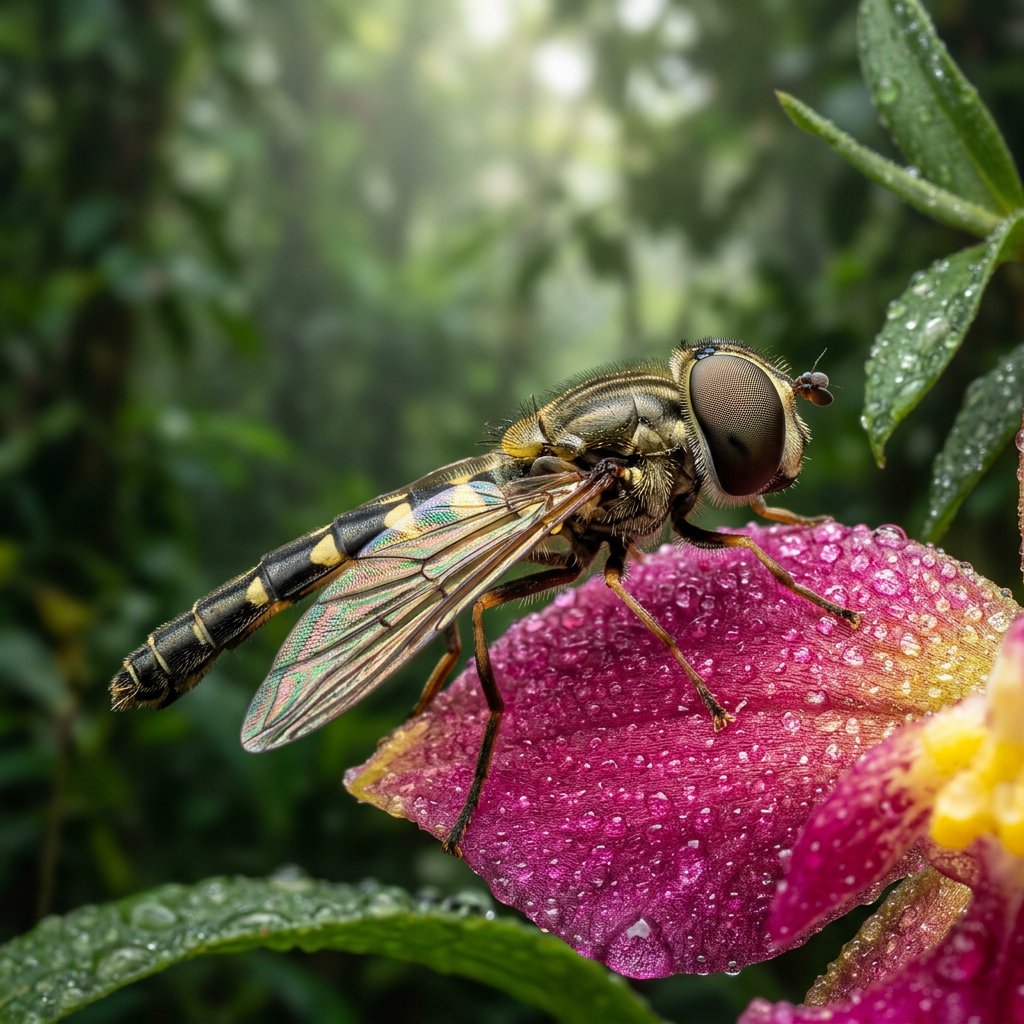
Often called "Phantom Hoverflies," members of the Ocyptamus genus are the graceful gymnasts of the insect world. While their needle-thin bodies and hovering flight might make them look like tiny, shimmering wasps, they are actually harmless flies that act as a secret defense force for your garden. They are masters of disguise, using their delicate appearance to blend into the dappled light of the forest undergrowth.
🔍 How to Identify
- ⌛ Slender Body: Most species feature an extremely narrow, "waisted" abdomen that can look like a thin thread or a club.
- 👀 Large Eyes: They possess massive, wraparound eyes typical of the fly family, which allow them to track movement with incredible precision.
- 💨 Flight Pattern: They are famous for their ability to hover perfectly still in mid-air before darting away in a blur—a behavior that gives "hoverflies" their name.
🌲 Habitat & Ecology
- 🛡️ Gardener’s Ally: While the adults drink nectar, the larvae are voracious predators. They crawl along leaves hunting for aphids, scales, and mealybugs, providing natural pest control for your roses and vegetables.
- 🌿 Dappled Shade: You will most likely spot them in gardens, orchards, or woodland edges, especially where sunlight filters through the leaves to create high-contrast shadows.
⚠️ Safety & Toxicity
- 🕊️ Non-Aggressive: Despite their resemblance to wasps (a survival tactic called Batesian mimicry), Ocyptamus flies have no stinger and cannot bite.
- 🐾 Safe for All: They are completely non-toxic and pose no risk to curious pets, children, or livestock. They are "all bark and no bite" in the most literal sense.
✨ Fun Fact
Some species of Ocyptamus have larvae that are "trash carriers." They actually glue the sucked-dry carcasses of their aphid victims onto their own backs to create a macabre suit of armor that camouflages them from hungry birds!
More Details








