Info
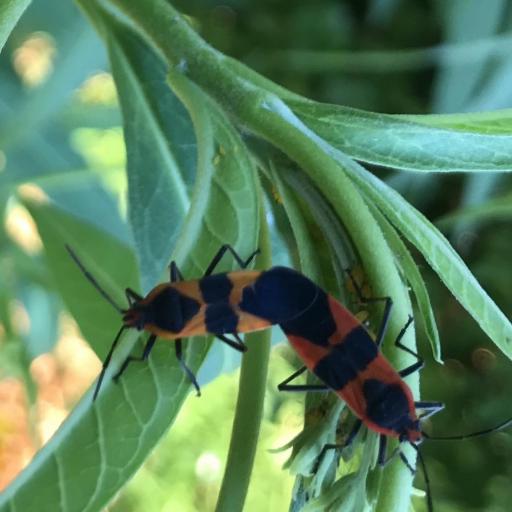
Often mistaken for a "fire bug" due to its striking "Halloween" color scheme, the Large Milkweed Bug is a vibrant orange and black insect that acts as a specialist consumer of milkweed seeds. While their bold patterns are designed to scream "danger" to predators, they are actually gentle garden inhabitants that play a unique role in the meadow ecosystem.
🔍 How to Identify
- 🐞 The X-Mark: Adult wings feature a distinct black band across the middle, forming a bold "X" shape against a bright orange or reddish background.
- 🐜 Elongated Body: They have a classic "true bug" oval shape, typically growing to about 1/2 to 3/4 of an inch in length with long, dark antennae.
- 👃 Sucking Mouthparts: Look for a long, straw-like proboscis (rostrum) tucked under the head, which they use to pierce tough seed pods.
🌲 Habitat & Ecology
- 🥛 Milkweed Specialist: These bugs are almost exclusively found on Milkweed (Asclepias) species. Unlike Monarch caterpillars which eat the leaves, these bugs prefer to feast on the nutrient-rich seeds inside the pods.
- 👯 Social Scavengers: They are gregarious insects, meaning they love company. You will often find large clusters of bright red nymphs (juveniles) and adults huddling together on a single seed pod.
- ✈️ Migratory Nature: Much like the Monarch butterfly, populations in northern climates fly south for the winter, as they cannot survive freezing temperatures in any life stage.
⚠️ Safety & Toxicity
- ✅ Harmless to Humans: They do not bite, sting, or carry diseases. They are safe to observe and handle gently, though they may release a mild scent if handled roughly.
- 🤢 Chemically Defended: By eating milkweed, they absorb toxic chemicals called cardenolides. This makes them taste bitter and potentially toxic to birds or spiders; their bright colors serve as a "Do Not Eat" warning.
- 🐾 Pet Safety: While they aren't aggressive, keep curious pets from snacking on them, as the milkweed toxins in their bodies could cause a minor stomach upset.
✨ Fun Fact
Because they are so easy to raise and have a fast life cycle, Large Milkweed Bugs are "superstars" of the science world—they have been used for decades in laboratory research to study everything from genetics to insect physiology!
More Details








