Info
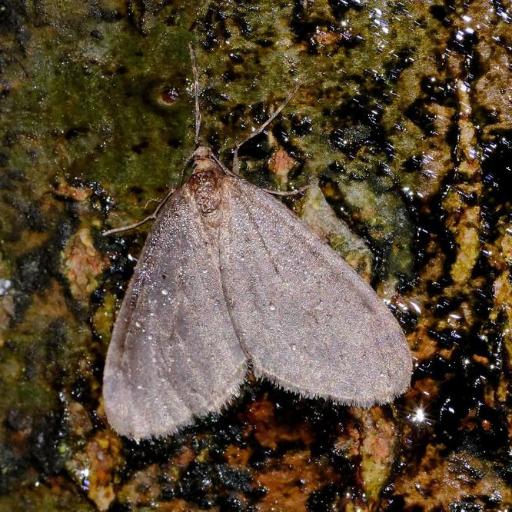
Often called the Winter Moth, this resilient insect defies the typical rules of nature by emerging when most other bugs are frozen in slumber. While the males flutter through the chilly November and December air like ghostly shadows, the females are unique "crawlers" that lack the power of flight. They are a classic sign that winter has truly arrived in the temperate forests of Europe and North America.
🔍 How to Identify
- 🦋 Sexual Dimorphism: The males have delicate, brownish-grey wings with faint dark wavy lines. In contrast, females are flightless, possessing only tiny, useless wing stubs that look like small bumps on their grey-brown bodies.
- 👣 The Crawl: You will often find the wingless females climbing vertically up the trunks of trees (especially Oak, Maple, and Apple) to reach the branches where they lay their eggs.
- 🐛 The "Looper" Larva: In the spring, the larvae appear as bright green "inchworms" with white stripes running down their sides. They move by arching their bodies into a loop, then stretching forward.
🌲 Habitat & Ecology
- 🌳 Springtime Specialists: While the adults are active in winter, the larvae are timed to hatch exactly when tree buds open. They are notorious for "tenting" or spinning light silk to pull leaves together for protection while they eat.
- 🐦 A Bird's Buffet: Despite being considered a pest in some orchards, they are an essential ecological link. Their caterpillars provide a massive, high-protein food source for woodland birds to feed their hungry chicks in late spring.
⚠️ Safety & Toxicity
- ✅ Harmless to Humans: The Winter Moth is completely safe to handle. They do not bite, sting, or possess any irritating hairs or toxins.
- 🍎 Garden Nuance: They are a "foe" to fruit growers. If you see many flightless females climbing your apple or cherry trees in winter, you may want to use "grease bands" (sticky traps) around the trunk to prevent them from laying eggs that will hatch into leaf-eating caterpillars in the spring.
✨ Fun Fact
❄️ Natural Antifreeze: To survive the freezing nights of December, Winter Moths have evolved special proteins in their hemolymph (insect blood) that act as biological antifreeze, preventing their cells from crystallizing even when the temperature drops below freezing!
More Details








