Info
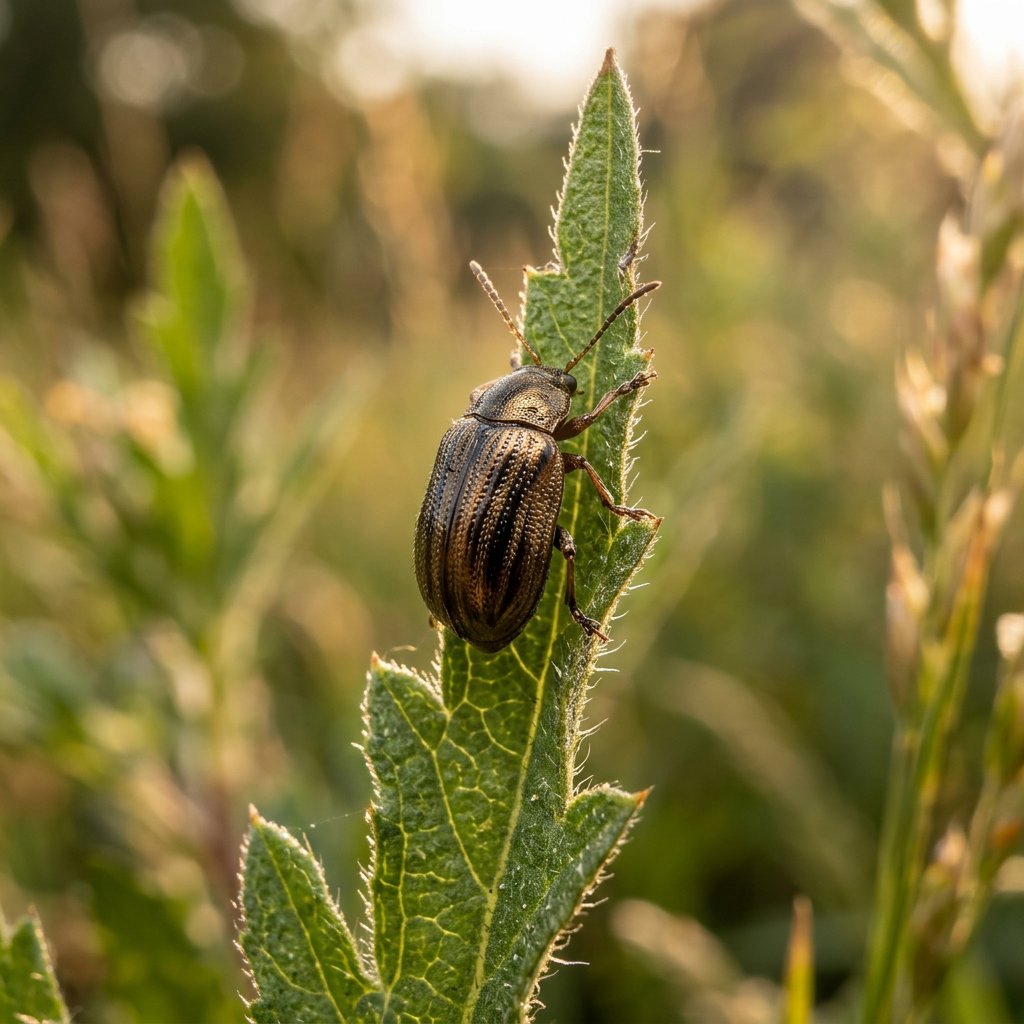
Often called the Ragweed Leaf Beetle, this tiny, striped specialist is an unsung hero for anyone who suffers from hay fever. While it might look like just another garden bug, it is a highly efficient "biocontrol agent" that spends its entire life cycle hunting down and devouring ragweed, one of the world’s most notorious allergens.
🔍 How to Identify
- 🪲 The Pattern: It features a pale yellow or tan body decorated with several dark, longitudinal stripes running down its wing covers (elytra).
- 📏 Size and Shape: It is quite small, usually only 3.5 to 5 mm long, with a slightly elongated, oval-shaped body.
- 🧐 The "Fuzz": If you look closely with a magnifying glass, you’ll notice the body is covered in very fine, short hairs, giving it a matte rather than shiny appearance.
🌲 Habitat & Ecology
- 🥗 A Picky Eater: This beetle is a "specialist" herbivore. It feeds almost exclusively on Common Ragweed (Ambrosia artemisiifolia). You will rarely find it on any other plant, making it a very safe guest in a diverse garden.
- 🍂 Defoliation Expert: Both the larvae and the adults eat the leaves. In high numbers, they can completely strip a ragweed plant bare, preventing it from producing the flowers that release irritating pollen.
- 🌍 A Global Traveler: While native to North America, it has accidentally spread to Europe and Asia. In places like Italy and China, it is now considered a beneficial "invasive" because it naturally reduces the pollen counts that cause seasonal allergies.
⚠️ Safety & Toxicity
- ✅ Harmless to Humans: This beetle does not bite, sting, or secrete any irritating chemicals. It is perfectly safe to observe or handle.
- 🐶 Pet Safety: It is non-toxic to dogs, cats, and livestock. It poses no threat to your home or indoor plants.
- 🌱 Plant Safety: Unlike the Colorado Potato Beetle or other pests, Ophraella communa will not eat your vegetable patch or ornamental flowers. It is focused entirely on its host weed.
✨ Fun Fact
In Milan, Italy, the accidental arrival of this beetle caused a 30% drop in ragweed pollen concentration in the air. For allergy sufferers, this little beetle is essentially a living, breathing antihistamine!
More Details








