Info
Often mistaken for a small butterfly due to its vibrant lemon-yellow wings, the Brimstone Moth is a jewel of the evening garden. Named after the old term for sulfur—"brimstone"—this moth is a common and friendly sight across Europe, North Africa, and parts of Asia. It is frequently found fluttering near hedgerows at dusk, looking more like a floating petal than an insect.
🔍 How to Identify
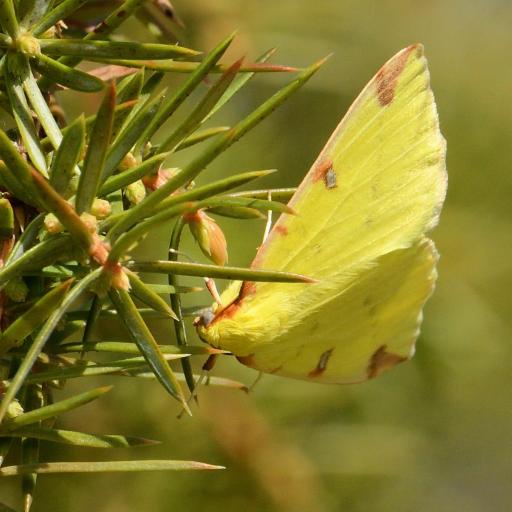
- 🟡 Wing Color: Brilliant canary or lemon yellow that remains vivid even when the moth is at rest.
- 🟤 Distinct Markings: Small, reddish-brown or "rusty" spots located along the leading edge of the forewings, often featuring a tiny, pale white center.
- 📐 Wing Shape: The edges of the wings are slightly scalloped or "toothed," giving the moth a delicate, jagged silhouette when perched.
🌲 Habitat & Ecology
- 🌳 The Hedgerow Specialist: This moth thrives in gardens, parks, and woodlands. It is particularly fond of areas where its favorite host plants, such as Hawthorn, Blackthorn, and Rowan, are allowed to grow.
- 🌿 Master of Disguise: While the adult is bright and visible, its caterpillar is a master of mimicry. It looks exactly like a small, brownish twig—complete with realistic "knots" on its back—allowing it to hide from hungry birds in plain sight.
- 🌙 Nocturnal Activity: Although it flies mostly at night and is frequently attracted to porch lights, it is easily disturbed from bushes during the day, making it a common surprise for gardeners pruning their hedges.
⚠️ Safety & Toxicity
- ✅ Status: Completely harmless. This moth is a "friend" to the gardener and poses no threat.
- 👐 Gentle Nature: The Brimstone Moth does not sting, bite, or produce any irritating chemicals. It is safe to observe closely, though its wings are delicate and should not be touched.
✨ Fun Fact
The Brimstone Moth is a "multi-brooded" species, meaning it can produce up to three different generations in a single year depending on how warm the weather is! This allows these "flying lemons" to be spotted from early April all the way through October.
More Details








