Info
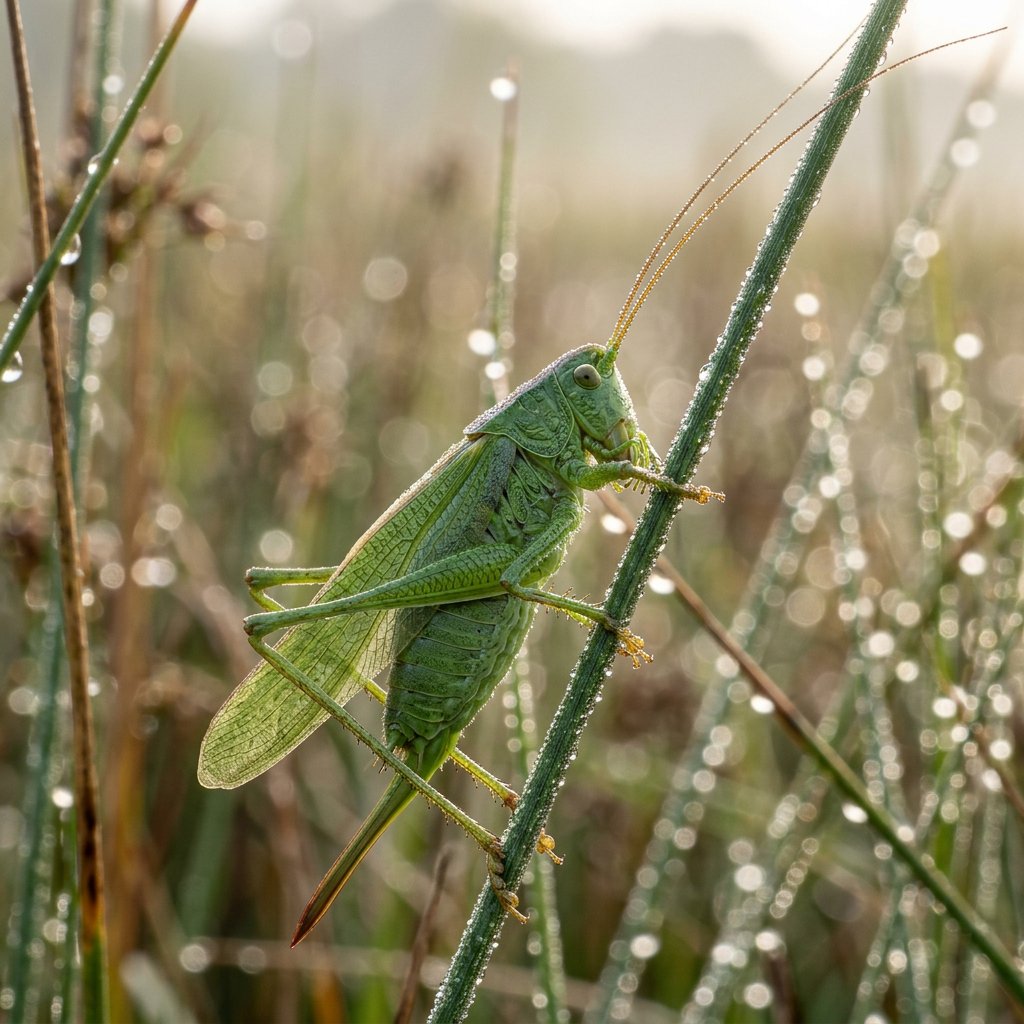
The Meadow Katydids of the genus Orchelimum are the quintessential soundtrack artists of late summer. Often mistaken for common grasshoppers, these elegant, slender insects are more closely related to crickets and are famous for their rhythmic, buzzy songs that fill sun-drenched fields. While the long, sword-like appendage on the female might look intimidating, it is a completely harmless tool used for the next generation.
🔍 How to Identify
- [📡] Extra-Long Antennae: Unlike grasshoppers, their antennae are incredibly thin and often much longer than their entire body.
- [⚔️] The "Sword" Tail: Females possess a prominent, curved ovipositor at the rear, which they use to precisely slice into plant stems to lay eggs.
- [🎨] Verdant Camouflage: They are typically a brilliant "leaf green," though some species feature a distinct brown or reddish stripe running down their back.
🌾 Habitat & Ecology
- [☀️] Sun-Seekers: These insects are most active during the day, clinging to vertical stalks of tall grasses, sedges, and wildflowers in meadows or near wetlands.
- [🎶] The "Sewing Machine" Song: Each species has a unique call, often described as a series of "ticks" followed by a long, dry "buzz," sounding remarkably like a tiny, rhythmic machine.
- [🥗] Opportunistic Eaters: While they primarily eat grass seeds and pollen, they are actually omnivorous and will occasionally hunt smaller insects like aphids, making them a net-positive for garden health.
⚠️ Safety & Toxicity
- [✅] Completely Harmless: Meadow Katydids do not sting, and they possess no venom. They are "friends" of the gardener and nature enthusiast.
- [🤏] Handle with Care: They are very shy and will usually rotate to the opposite side of a grass blade to hide. If caught, a large adult might deliver a tiny, harmless pinch with its mandibles, but they prefer to use their powerful back legs to leap to safety.
- [🐶] Pet Safe: They are non-toxic to curious dogs or cats who might try to pounce on them in the tall grass.
✨ Fun Fact
[🎻] Leg Ears: Meadow Katydids don't hear with their heads! Their "ears" (called tympana) are actually located on their front legs, just below the knee joint, allowing them to pinpoint the direction of a rival's song with incredible accuracy.
More Details