Info
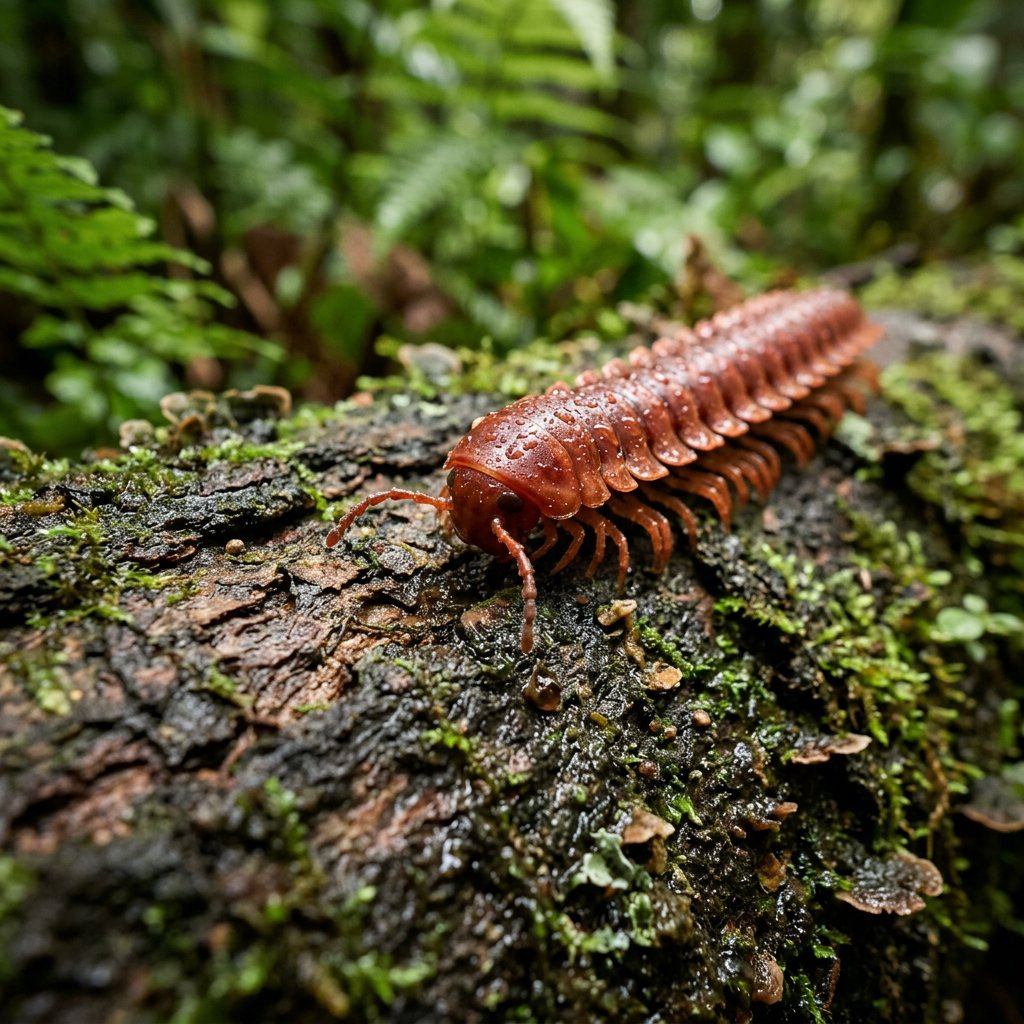
Often called the Yellow-banded Millipede or the Long-flange Millipede, this armored wanderer is a common sight in tropical and subtropical gardens worldwide. While its bold colors and many legs might look intimidating, it is a peaceful recycler that turns dead leaves into "black gold" for your soil. It is essentially a tiny, leggy janitor for the forest floor.
🔍 How to Identify
- 🎨 High Contrast: It features a deep chocolate-brown to jet-black body, decorated with bright yellow or orange "flanges" (wing-like extensions) on each segment.
- 🛡️ Flat-Backed Shape: Unlike the typical "sausage-shaped" millipedes, this species looks somewhat flattened and armored, giving it a rugged, prehistoric appearance.
- 👣 Synchronized Legs: Dozens of pale, cream-colored legs move in a rhythmic, wave-like motion beneath its body as it glides across the ground.
🌲 Habitat & Ecology
- 🍂 The Decomposer: This millipede is a detritivore, meaning its primary job is eating decaying plant matter. It plays a vital role in nutrient cycling by breaking down tough leaf litter.
- 🚿 Moisture Seekers: They thrive in high-humidity environments. You are most likely to find them under flower pots, tucked into damp mulch, or wandering across patios after a heavy tropical rain.
- 🏡 Garden Friend: Unlike many insects, they don't eat live plants or crops. Having them in your garden is generally a sign of healthy, organic-rich soil.
⚠️ Safety & Toxicity
- 🧪 Chemical Defense: They do not bite or sting. However, when threatened or crushed, they release a defensive secretion that contains small amounts of hydrogen cyanide.
- 👃 The Almond Scent: If you disturb one, you might notice a faint smell of bitter almonds—this is the warning gas they emit to tell birds and lizards they aren't a tasty snack.
- 🧼 Handling Advice: While not dangerous to humans in small amounts, the secretion can irritate the eyes or sensitive skin. It is best to admire them with your eyes, and if you do touch one, wash your hands immediately. Keep curious pets from licking or swallowing them.
✨ Fun Fact
Despite having dozens of legs and navigating complex leaf litter, the Orthomorpha coarctata is completely blind! It lacks eyes entirely, instead using its highly sensitive antennae to "smell" and "feel" its way through the dark, damp world of the soil.
More Details








