Info
Known as the Elephant Weevil for its remarkably long "trunk," this quirky insect is a master of disguise in the Australian bush. While its elongated snout might look like a needle or a stinger, it is actually a specialized tool for feeding and egg-laying. Though they are fascinating to watch, gardeners with citrus trees or grapevines often keep a wary eye on them, as their larvae have a hearty appetite for wood.
🔍 How to Identify
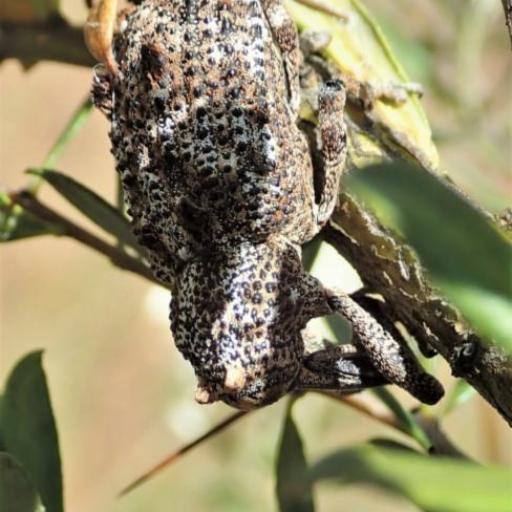
- 🐘 The "Trunk": The most striking feature is its very long, downward-curving rostrum (snout), which can be nearly half the length of its body.
- 🧥 Textured Armor: Its body is covered in small, raised bumps and scales in shades of earthy brown, grey, and black, perfectly mimicking the texture of tree bark or lichen.
- 📏 Stout Stature: It has a cylindrical, robust body, typically growing between 10mm and 20mm in length, making it one of the larger weevils you might encounter.
🌲 Habitat & Ecology
- 🍂 Master of Camouflage: These weevils spend their days clinging to the bark of trees like Eucalyptus, Citrus, or Wattle. When they stay still, they are nearly impossible to spot against the wood.
- 🍎 A Hidden Life: While the adults munch on bark and foliage, the larvae are "wood-borers." They tunnel into the stems and trunks of plants, which can occasionally cause limbs to die back or weaken the plant's structure.
- 🛡️ The "Play Dead" Trick: If you touch an Elephant Weevil or it feels threatened, it will suddenly tuck in its legs and drop to the ground, remaining perfectly still (thanatosis) until the danger passes.
⚠️ Safety & Toxicity
- ✅ Harmless to Humans: The Elephant Weevil is completely non-venomous. It does not bite, sting, or carry diseases that affect humans or pets.
- 🌿 Garden Impact: While safe to handle, they are considered minor pests in orchards. If you find them on your prize lemon tree, it’s best to move them to a non-fruiting native tree nearby rather than using harsh chemicals.
✨ Fun Fact
The female Elephant Weevil uses her long snout like a drill! She bores a hole deep into solid wood, then turns around to lay an egg inside, ensuring her offspring are born in a safe, food-rich "bunker."
More Details








