Info
Often called the "Saw-toothed Grain Beetle," this tiny, flat traveler is a common uninvited guest in kitchens and warehouses worldwide. Despite its name, it isn't from the jungle; it was simply first described in Suriname, but has since hitched rides on trade ships to every corner of the globe. It is a master of entry, capable of squeezing through the smallest gaps in food packaging.
🔍 How to Identify
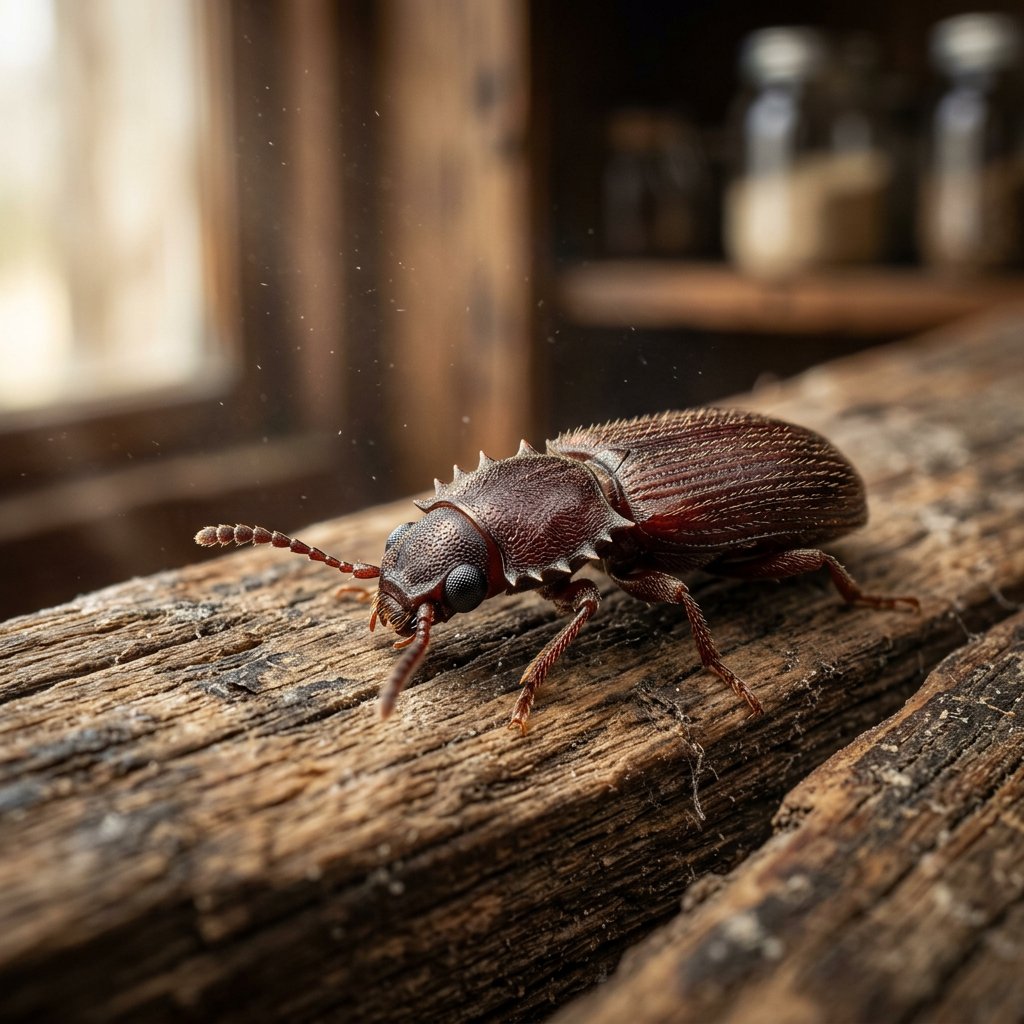
- 🪚 The "Saw" Thorax: The most defining feature is the six saw-like "teeth" on each side of its thorax (the segment behind the head), which give it its name.
- 📏 Ultra-Flat Body: They are incredibly thin and flat, measuring only about 2.5–3mm in length. This allows them to hide in the microscopic folds of cardboard boxes or plastic bags.
- 🎨 Reddish-Brown Hue: They possess a uniform, dull chocolate-brown or reddish-brown color with a matte texture, helping them blend in with grains and spices.
🏠 Habitat & Ecology
- 🥣 The Pantry Specialist: Unlike other beetles that bore into whole seeds, the Saw-toothed Grain Beetle is a "secondary pest." It prefers processed goods like flour, cereal, pasta, dried fruits, and even chocolate.
- 🚪 The Great Escape Artist: Because they cannot fly, they rely on their walking speed and their ability to hide. They are often brought into homes unknowingly within grocery store items that were already infested at the processing plant.
- ❄️ Cold Resistance: They are surprisingly hardy and can survive in cool climates, though they stop breeding if the temperature drops below 60°F (15°C).
⚠️ Safety & Toxicity
- 🚫 Non-Toxic Foe: These beetles do not bite, sting, or carry diseases that infect humans or pets. They are considered a "nuisance pest" rather than a medical threat.
- 🗑️ Food Waste: The primary danger is food spoilage. They contaminate dry goods with their waste and shed skins. If you find them, it is best to discard the infested package and check nearby containers, as they move quickly from one box to another.
✨ Fun Fact
The Saw-toothed Grain Beetle is so thin that it can crawl through the needle-sized holes in a salt shaker or the tiny gaps in a "sealed" Tupperware container!
More Details








