Info
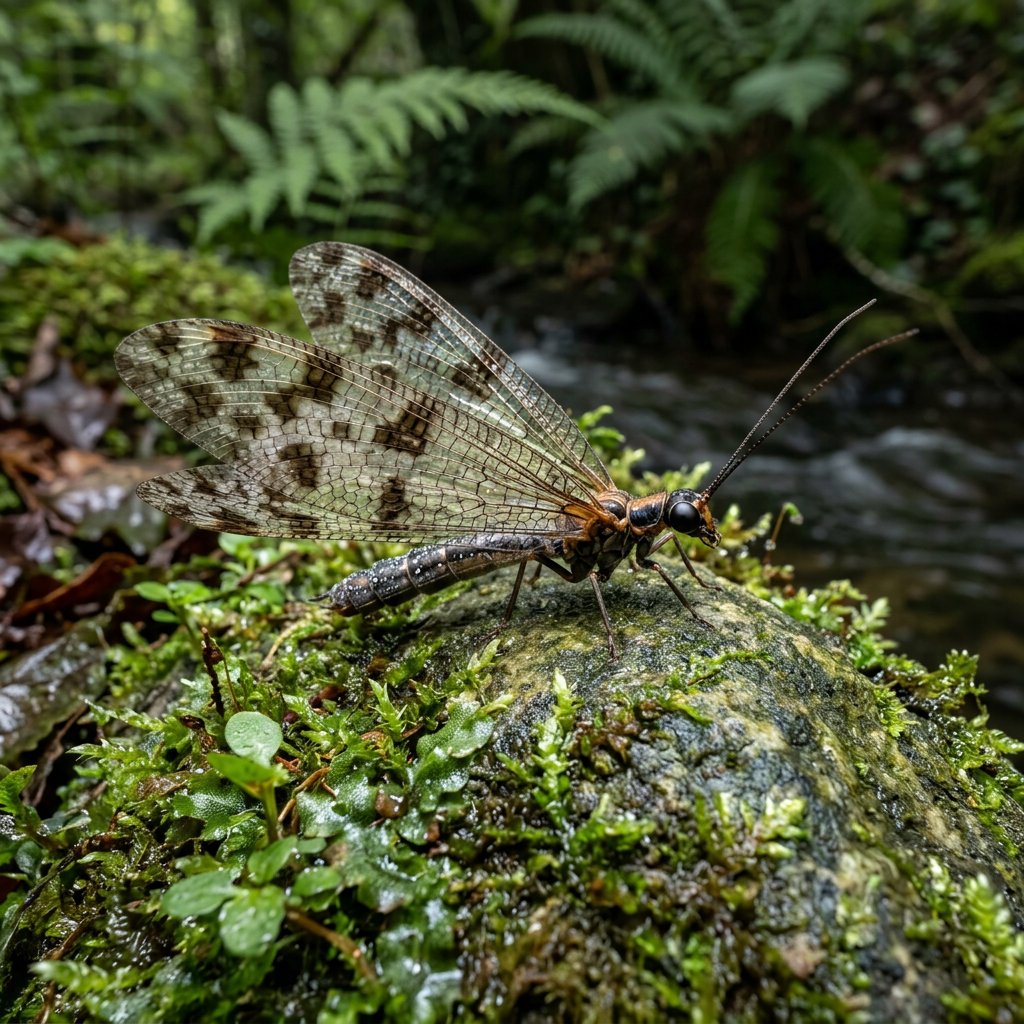
The Giant Lacewing (Osmylus fulvicephalus) is a delicate relic of the ancient world, often described as a "fluttering fairy" of the riverside. With its impressive wingspan and striking amber head, it looks more like a creature from a fantasy novel than a typical garden bug. Despite its somewhat imposing size for a lacewing, it is a secretive and gentle inhabitant of clean, shaded waterways.
🔍 How to Identify
- 🦋 The Wings: Broad, translucent wings heavily dappled with dark brown or black spots, creating a "leopard print" effect when at rest.
- 🟠 The Head: A distinct, bright orange or brownish-red head that contrasts sharply with its dark, slender body.
- 📏 The Size: Much larger than the common green lacewings found in gardens, with a wingspan that can reach up to 5 centimeters.
🌲 Habitat & Ecology
- 💧 Water Quality Indicator: These insects are nature’s "health inspectors." They are almost exclusively found near clean, slow-moving streams and rivers with plenty of overhanging vegetation.
- 🦎 Semi-Aquatic Hunters: While the adults flutter among the leaves, their larvae are fierce predators that live in the damp moss and mud at the water's edge, hunting small invertebrates with long, needle-like jaws.
- 🌑 Shadow Seekers: You are most likely to spot them in deep shade during the day; they dislike bright sunlight and prefer the cool, humid microclimate of wooded riverbanks.
⚠️ Safety & Toxicity
- ✅ Harmless Friend: The Giant Lacewing is completely harmless to humans. It does not sting, and its mandibles are not strong enough to pierce human skin.
- 🛡️ Fragile Nature: They are very sensitive to water pollution and habitat disturbance. If you see one, it’s a sign that the local ecosystem is in excellent condition—so admire it from a distance!
✨ Fun Fact
Unlike many insects that are either fully aquatic or fully terrestrial, the larvae of the Giant Lacewing are "amphibious" specialists. They can hunt under the water’s surface by holding their breath, then crawl back onto land to rest in the moss!
More Details








