Info
Known widely as the Strawberry Root Weevil, this little beetle is more of a nuisance than a nightmare. While they might startle you by crawling across your kitchen floor or climbing a wall in mid-summer, they are actually garden-dwelling vegetarians seeking a cool place to rest. They are members of the "snout beetle" family, famous for their distinctive, endearing faces.
🔍 How to Identify
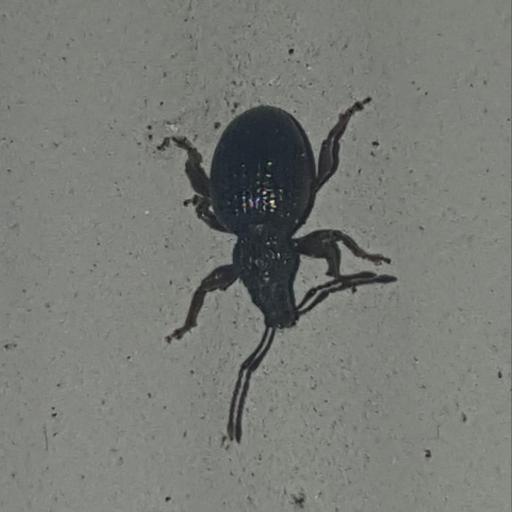
- 🪲 The Body Shape: They possess a plump, pear-shaped body that is typically matte black or very dark brown with a slightly "bumpy" or punctured texture.
- 👃 The Snout: Like all weevils, they have a visible snout (rostrum), though it is shorter and broader than some of their cousins, with elbowed antennae attached halfway down.
- 🚫 Fused Wings: Interestingly, their wing covers (elytra) are fused together. This means they are completely flightless and must walk everywhere they go.
🌲 Habitat & Ecology
- 🍓 A Root-Based Life: As larvae, they live underground where they munch on the roots of strawberries, raspberries, and many ornamental shrubs. As adults, they climb upward to snack on the edges of leaves.
- 🏠 The Summer "Invasion": During hot, dry spells, these weevils often wander into houses through cracks and under doors. They aren't looking for your pantry—they are simply searching for moisture and a break from the heat.
- 🌙 Night Owls: They are primarily nocturnal. If you see "notched" edges on your garden leaves but don't see any bugs during the day, grab a flashlight after dark to catch them in the act.
⚠️ Safety & Toxicity
- ✅ Completely Harmless: The Strawberry Root Weevil does not bite, sting, or carry any diseases. They are safe for children and pets to be around.
- 📉 Garden Impact: While they are harmless to humans, a large population can weaken garden plants. If you find them indoors, simply sweep them back outside; they cannot survive long in the dry air of a home.
✨ Fun Fact
- 👯 No Boys Allowed: Many populations of Otiorhynchus ovatus are entirely "parthenogenetic." This means the females can produce fertile eggs without ever needing to mate with a male!
More Details








