Info
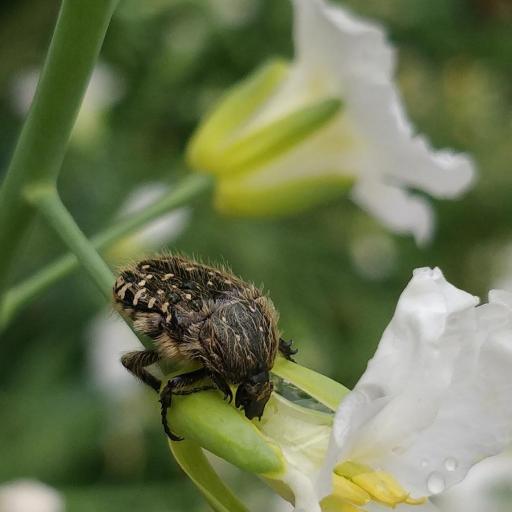
Often called the White-spotted Rose Beetle or the Mediterranean Rose Chafer, this little beetle looks like a polished piece of obsidian scattered with tiny snowflakes. While they are undeniably elegant to look at, gardeners often have a love-hate relationship with them because of their habit of crashing garden parties just as the roses begin to bloom.
🔍 How to Identify
- 🪲 The Body: A small, oval-shaped beetle (usually 8–12 mm) with a shiny, coal-black or deep bronze metallic finish.
- ❄️ The "Freckles": Its most striking feature is the pattern of small, irregular white spots (maculae) decorating its back and the sides of its thorax.
- 🧸 Fuzzy Texture: If you look closely or use a magnifying glass, you’ll see the beetle is covered in fine, grayish hairs that help it collect pollen as it moves.
🌲 Habitat & Ecology
- 🍽️ The Gourmet Diet: This beetle is a "flower-feeder." Instead of munching on leaves, it goes straight for the protein-rich pollen and the delicate reproductive parts of flowers, such as stamens and pistils.
- 🌤️ Sun Lovers: You will mostly find them active on warm, sunny days from May to July. They are particularly attracted to light-colored or white flowers, including roses, peonies, and fruit tree blossoms.
- 🌱 Soil Dwellers: Their larvae (grubs) live underground or in compost, where they feed on decaying plant matter and roots before emerging as the jewel-like adults we see in summer.
⚠️ Safety & Toxicity
- 🛡️ Status: Harmless to humans and pets.
- 🚫 No Sting or Bite: Despite their somewhat "armored" appearance, they possess no stingers or fangs. They are gentle insects that rely on their hard shells and flight to escape predators.
- 🌿 Garden Impact: While they aren't "dangerous," they can be a nuisance for florists. They don't kill the plant, but they can make individual flowers look a bit ragged by nibbling on the petals.
✨ Fun Fact
These beetles are "messy" pollinators! Because of the thick hairs on their underside, they get covered in pollen while eating. As they clumsy-fly from flower to flower, they inadvertently help fertilize many of the plants they visit, making them accidental garden helpers.
More Details