Info
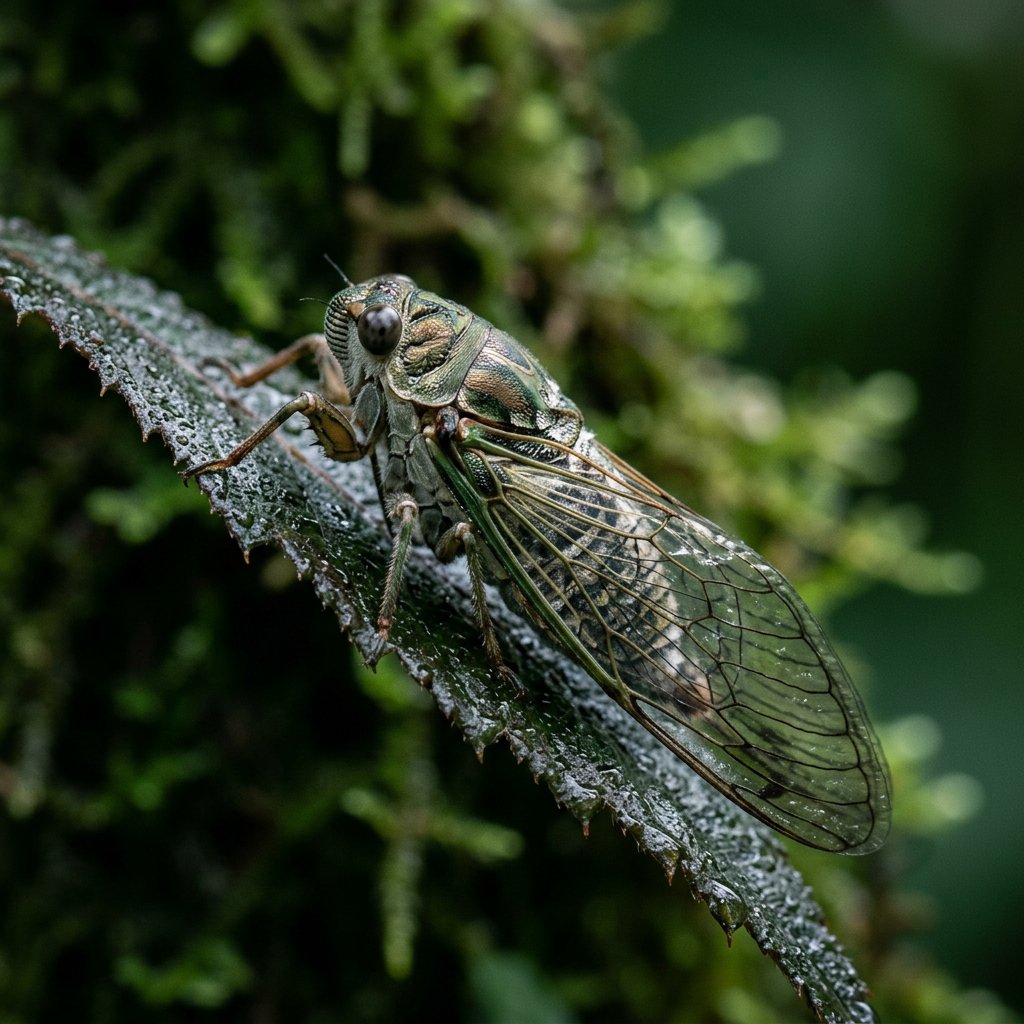
Often called the "Little Mesquite Cicada," this tiny insect is the hidden drummer of the desert and scrublands. While its larger cousins are famous for their deafening summer roars, the Pacarina puella produces a high-pitched, metallic buzz that sounds more like a buzzing power line than a bug. It is a master of disguise, blending so perfectly with tree bark that you will likely hear it long before you ever see it.
🔍 How to Identify
- 📏 Diminutive Size: Unlike the giant "dog-day" cicadas, this species is remarkably small, usually measuring less than an inch (20mm) in length.
- 🎭 Bark Mimicry: Its body is a complex mosaic of mottled brown, lichen-green, and gray tones, specifically evolved to vanish against the texture of a tree trunk.
- 🪟 Glass-Like Wings: It possesses large, completely transparent wings with delicate dark veins that extend significantly past the end of its abdomen.
🌲 Habitat & Ecology
- 🌳 Tree Specialist: As its nickname suggests, it is most commonly found clinging to Mesquite, Juniper, and Cedar trees across the Southern United States and Mexico.
- 🥤 Sap Sipper: They use a straw-like mouthpart to drink xylem (watery sap) from tree branches. While they "eat" from the tree, they are not considered a serious agricultural pest.
- ⚡ The Electric Song: Males use specialized organs called "timbals" to create a rapid, dry, clicking buzz. On a hot afternoon, a chorus of these insects can make an entire grove of trees sound like it’s vibrating with static electricity.
⚠️ Safety & Toxicity
- ✅ Completely Harmless: Pacarina puella does not bite, sting, or possess any venom. They are "gentle giants" in a tiny body and are safe for curious children or pets to observe.
- 🦎 Nature's Snack: Because they lack chemical defenses, they are a vital food source for birds, lizards, and predatory wasps, playing a key role in the local food web.
✨ Fun Fact
Despite being one of the smallest cicadas in North America, they are incredibly loud for their body mass. They often synchronize their buzzing with neighboring males to create a "wall of sound," which makes it nearly impossible for birds to pinpoint the location of any single insect!
More Details








