Info
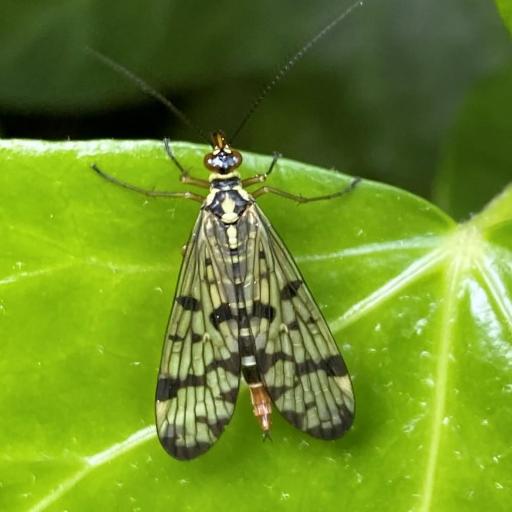
Often called the "German Scorpionfly," this insect looks like a creature plucked straight from a fantasy novel. Despite its menacing appearance—complete with what looks like a venomous stinger—it is a gentle scavenger that plays a unique role in the ecosystem. You will typically find them dancing through the damp, shaded woodlands and hedgerows of Europe during the warmer months.
🔍 How to Identify
- 🦟 The Long Beak: It features a distinct, downward-pointing "beak" or rostrum, which it uses to probe into crevices for food.
- 🪽 Patterned Wings: The wings are mostly translucent but are peppered with dark, irregular black spots; Panorpa germanica specifically tends to have fewer spots than its close relatives.
- 🦂 The "Stinger" Tail: Males possess a curved, bulbous tail tip that looks identical to a scorpion’s stinger, though it is actually a completely harmless reproductive organ.
🌲 Habitat & Ecology
- 🌿 Shady Retreats: This species thrives in moist, overgrown areas, often resting on the broad leaves of stinging nettles or brambles to stay out of the direct sun.
- 🕸️ The Web Thief: They are daring "kleptoparasites," meaning they frequently steal dead insects trapped in spider webs, using their long legs to navigate the silk without getting caught themselves.
⚠️ Safety & Toxicity
- 🛡️ Completely Harmless: Despite the frightening appearance of the male’s tail, scorpionflies cannot sting, bite, or secrete any venom.
- 🐾 Non-Toxic: They are not poisonous to pets or humans and are generally considered a "neutral" or "friendly" presence in a healthy garden ecosystem.
✨ Fun Fact
To win over a mate, the male Scorpionfly must provide a "nuptial gift." This is usually a dead insect he has scavenged, but if he cannot find one, he will present the female with a mass of his own nutrient-rich, solidified saliva!
More Details








