Info
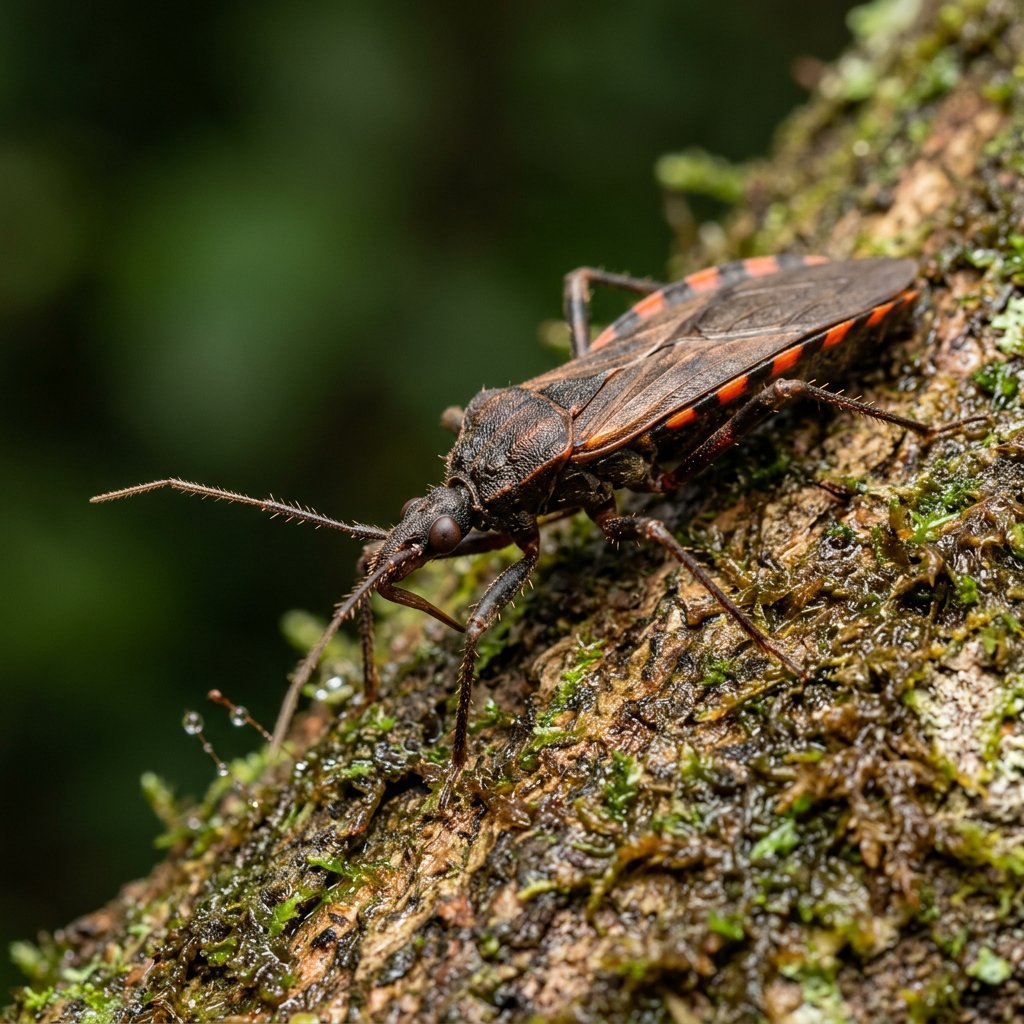
Often called "Kissing Bugs," members of the Panstrongylus genus are elusive nocturnal insects with a notorious reputation. While they belong to the wider "Assassin Bug" family, these specific members have traded hunting other bugs for a diet of vertebrate blood. Primarily found in Central and South America, they are stealthy survivors that have adapted to live both in deep forests and near human settlements.
🔍 How to Identify
- 🛡️ Cone-Shaped Head: They possess a distinct, elongated head that looks like a tiny cone, housing a specialized straw-like mouthpart used for feeding.
- 🎨 Border Patterns: Their flattened, oval bodies are typically dark brown or black, lined with striking orange or reddish-yellow rectangular markings along the outer edge of the abdomen.
- 🪽 Folded Wings: When resting, their wings fold flat over their back in a "V" shape, blending into their dark coloration to help them hide in shadows.
🌲 Habitat & Ecology
- 🌙 Night Owls: These insects are strictly nocturnal. During the day, they hide in dark, tight spaces like hollow trees, rock crevices, or animal burrows.
- 💡 Light Seekers: Despite their love of darkness, they are paradoxically attracted to porch lights and indoor lamps, which is often how they find their way into human homes.
- 🧛 Specialized Diet: Unlike other assassin bugs that eat garden pests, Panstrongylus feeds exclusively on the blood of mammals, birds, and reptiles.
⚠️ Safety & Toxicity
- 🚨 Medical Concern: These bugs are significant vectors for Chagas disease. The infection isn't transmitted through the bite itself, but through parasite-laden droppings left near the wound.
- 🩹 Painless Bites: Their bite is usually painless to avoid waking the host, but it can cause localized swelling or an allergic reaction in some people.
- 🐾 Pet Safety: Dogs and cats are also at risk. If you find these bugs in your home, it is important to seal cracks in walls and keep outdoor lights turned off near entryways.
✨ Fun Fact
- 💋 The "Kiss" of the Bug: They earned the nickname "Kissing Bug" because they prefer to bite humans on the soft skin around the lips and eyes while they sleep!
More Details








