Info
The Orchard Swallowtail is a true Australian icon, often seen gliding through suburban gardens with an elegant, slow-flapping flight. Known to gardeners as both a majestic visitor and a "citrus-hungry" guest, this butterfly is one of the largest species found on the continent. Its caterpillars are famously nicknamed "Citrus Dogs" because of their insatiable appetite for lemon and orange trees.
🔍 How to Identify
- 🦋 The Wingspan: These are giants of the garden, with a broad wingspan reaching up to 14 centimeters. The wings are predominantly black with bold, creamy-white patches on the forewings.
- 🎨 Male vs. Female: This species shows striking differences between sexes. Males are sleekly black and white, while females are more ornate, featuring vibrant red and blue "eyespots" on their hindwings to mimic other, more toxic butterfly species.
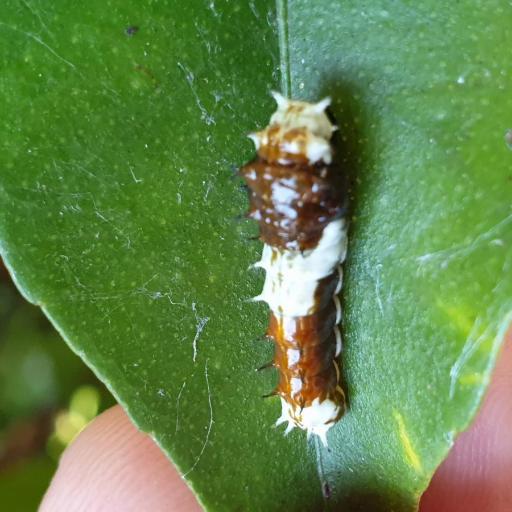
- 🐛 The "Citrus Dog" Larva: In their early stages, the caterpillars look exactly like fresh bird droppings (shiny brown and white) to trick predators. As they grow, they turn a fleshy green with white "saddle" markings and small blue spots.
🌲 Habitat & Ecology
- 🍋 Orchard Residents: As the name suggests, they are most common in areas with citrus plants. While the adults serve as important pollinators for a variety of flowers, the larvae are specialists that can strip the leaves of a young sapling in just a few days.
- 🏙️ Urban Survivors: Unlike many butterflies that retreat as cities grow, the Orchard Swallowtail has thrived in human environments. They have successfully moved from rainforest edges into backyard orchards and city parks across Eastern Australia.
⚠️ Safety & Toxicity
- ✅ Friendly Giant: These butterflies are completely harmless to humans and pets. They do not bite, sting, or carry any toxins that would hurt a curious child or a cat.
- 👃 The Stink Defense: If you startle a caterpillar, it will suddenly deploy a bright orange, forked organ called an osmeterium from behind its head. This organ emits a pungent, "fermenting citrus" odor designed to repel birds and garden explorers.
✨ Fun Fact
🎭 Master of Disguise: The young caterpillar’s "bird poop" camouflage is so effective that it can sit in plain sight on a leaf for days without a single bird realizing it’s actually a delicious, high-protein snack!
More Details








