Info
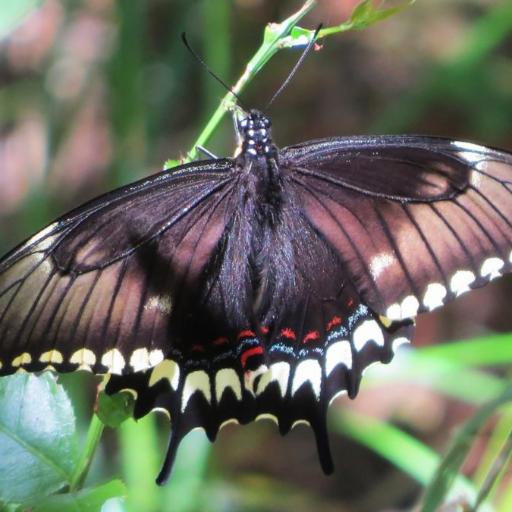
Meet the Broad-banded Swallowtail, a high-speed acrobat of the Americas. While the males are famous for their bold, sunny-yellow racing stripes, the females are masters of disguise, often mimicking darker, toxic butterflies to fool hungry birds. If you spot a flash of lemon-yellow darting through a citrus grove, you’ve likely found this charismatic garden visitor.
🔍 How to Identify
- 🦋 The Wings (Male): Look for broad, continuous yellow bands stretching across a dark chocolate or black background. They feature the classic "swallowtail" extensions on the hindwings.
- 🎭 The Wings (Female): Unlike the males, females are often darker with subtle white or pinkish spots. This "mimicry" allows them to blend in with unpalatable species for protection.
- 🐛 The Caterpillar: Young larvae are experts at "ugly" camouflage—they look exactly like shiny bird droppings to discourage predators. As they grow, they turn a mottled green and brown.
🌲 Habitat & Ecology
- 🍊 Citrus Lovers: These butterflies are strongly tied to the Rutaceae family. Their caterpillars feast almost exclusively on the leaves of orange, lemon, and lime trees, making them a common sight in orchards.
- 💨 Powerful Flyers: Unlike some "fluttery" butterflies, the Broad-banded Swallowtail is a strong, erratic flyer. They are often seen patrolling forest edges or gardens at high speeds in search of nectar.
- 🌸 Pollination Role: As they move from flower to flower (favoring Lantana and Bougainvillea), they play a vital role in local ecosystems by transferring pollen on their fuzzy bodies.
⚠️ Safety & Toxicity
- ✅ Harmless Friend: This insect is completely safe for humans. They do not bite, sting, or possess any venom.
- 👃 The Stink Defense: If you disturb the caterpillar, it may extend a bright orange, V-shaped organ from its head called an osmeterium. This emits a pungent, foul-smelling odor to drive away ants and spiders, but it is harmless to people.
- 🍋 Garden Impact: While the caterpillars eat citrus leaves, they rarely occur in large enough numbers to kill a healthy tree. They are usually considered a "minor" pest and a welcome sight for butterfly enthusiasts.
✨ Fun Fact
The Broad-banded Swallowtail is a master of the "bait and switch." Because the females look so much like the poisonous Parides butterflies, birds that have had a bad experience eating the toxic version will leave the perfectly edible Broad-banded Swallowtail alone!
More Details








