Info
Often hailed as one of the most breathtaking butterflies in the northern hemisphere, the Alpine Black Swallowtail (Papilio maackii) looks as if it were dipped in emerald and sapphire dust. This "flying jewel" is a gentle friend of the forest, acting as a tireless pollinator and a symbol of high-altitude beauty throughout East Asia. While its dark silhouette might seem imposing at a distance, a closer look reveals a shimmering masterpiece of natural engineering.
🔍 How to Identify
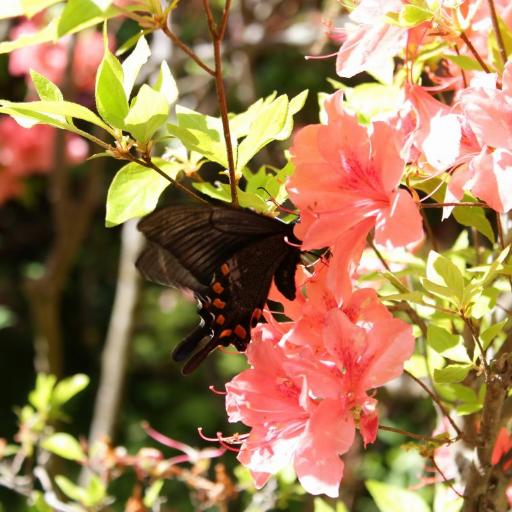
- 🦋 Iridescent Scales: The upper wings are a deep velvet black, heavily dusted with brilliant metallic green and blue scales that shimmer intensely depending on the angle of the light.
- 📍 Signature Tails: Like all swallowtails, it features elegant, elongated extensions on its hindwings that mimic the look of a swallow's tail.
- 🎨 Vibrant Underside: The underside of the wings is paler and more brownish, decorated with a striking row of reddish-orange crescent shapes along the edges.
🌲 Habitat & Ecology
- 💧 The Puddling Habit: You will often find groups of males congregating on damp soil or near forest puddles. This behavior, known as "puddling," allows them to drink mineral-rich water necessary for their reproductive health.
- 🌿 Pickery Eaters: While the adults sip nectar from various wildflowers, the caterpillars are quite specific, preferring to feast on the leaves of Cork trees (Phellodendron) and Prickly Ash (Zanthoxylum).
- 🏔️ Mountain Dwellers: As their "Alpine" name suggests, they thrive in temperate forests and mountainous regions, often flying high in the canopy until they descend to feed.
⚠️ Safety & Toxicity
- 🛡️ Completely Harmless: The Alpine Black Swallowtail is a peaceful insect. It does not possess a stinger, and its mouthparts are designed only for sipping liquids, meaning it cannot bite humans.
- 🐈 Pet Friendly: They are non-toxic to domestic animals. However, their erratic and fast flight patterns might trigger a "predatory" chase response in curious cats or dogs.
- 👐 Fragile Beauty: Like all butterflies, their wings are covered in microscopic scales. Handling them can rub these scales off, hindering their ability to fly and regulate body temperature.
✨ Fun Fact
- ✨ Naturalist's Legacy: This butterfly was named in honor of Richard Maack, a 19th-century Russian naturalist who braved the rugged wilderness of the Amur River valley to document the region's incredible wildlife.
More Details








