Info
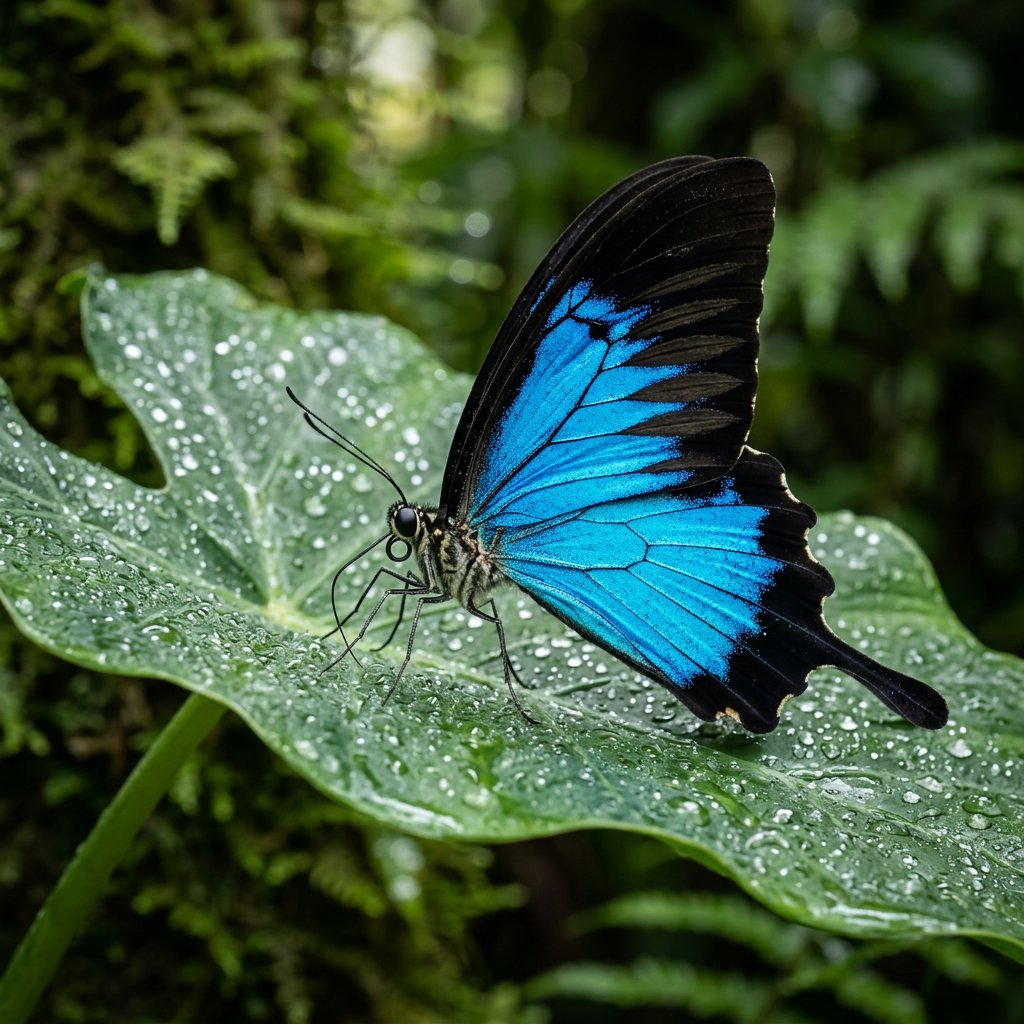
Known as the "Blue Mountain Butterfly," the Ulysses Swallowtail is the unofficial mascot of Tropical North Queensland, Australia. With its wings spread, it looks like a shimmering piece of the electric sky has fallen into the emerald rainforest. Because of its erratic, dancing flight pattern and brilliant color, it is often seen as a symbol of transformation and fleeting beauty.
🔍 How to Identify
- 🦋 Electric Blue Wings: The upper side of the wings features a brilliant, iridescent metallic blue that seems to glow or "flash" when the butterfly is in motion.
- 🖤 Velvet Borders: The vibrant blue centers are framed by thick, velvety black borders that extend to the tips of the wings.
- 📐 Swallowtail Points: Like all members of its family, it possesses distinctive "tails" or extensions on the hindwings, which help distract predators away from its vital body parts.
- 🍂 Cryptic Underside: When the wings are closed, the butterfly "disappears." The underside is a dull, camouflaged brown and black, mimicking a dead leaf to hide from birds.
🌲 Habitat & Ecology
- 🌿 Rainforest Specialist: These butterflies primarily inhabit the canopy of tropical rainforests and suburban gardens near coastal regions where their favorite trees grow.
- 🍭 A Picky Eater: As caterpillars, they feed almost exclusively on the Pink Flowered Doughwood (Melicope elleryana). As adults, they use their long proboscis to drink nectar from various bright, tubular flowers.
- 🛡️ Erratic Flight: Their flight is incredibly fast and zigzagged. The constant "flickering" of blue and black makes it difficult for a predator to track their exact position in the dappled sunlight.
⚠️ Safety & Toxicity
- ✅ Perfectly Safe: The Ulysses Butterfly is a gentle friend of the garden. It does not bite, sting, or carry any toxins that are harmful to humans.
- 🐾 Pet Friendly: They are non-toxic to dogs and cats. However, they are very fragile, so it is best to admire their beauty from a distance without trying to touch their delicate wing scales.
✨ Fun Fact
Male Ulysses butterflies are famously "blinded by love." They are so attracted to the color blue that they will swoop down to investigate anything of that hue—including blue hats, parked cars, or even blue scrap paper used by researchers to lure them closer for study!
More Details








