Info
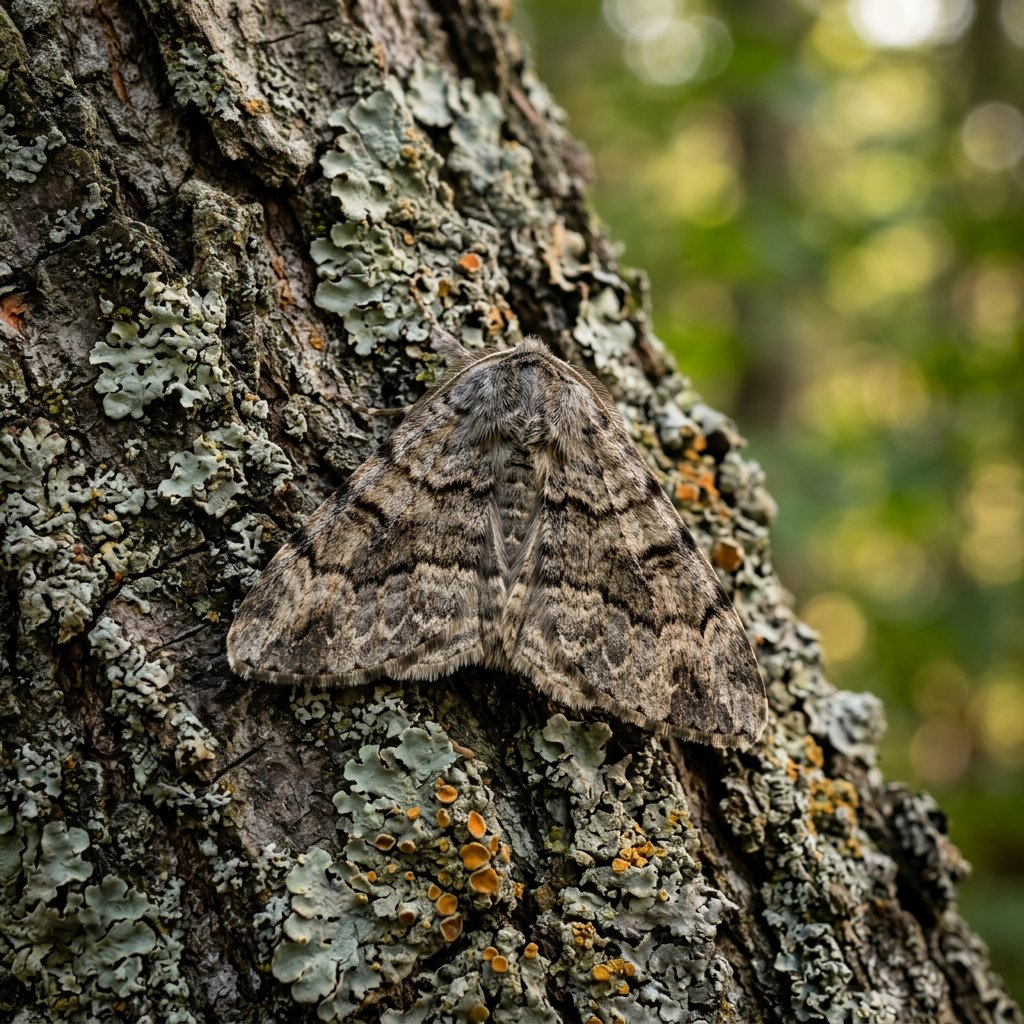
The Maple Looper Moth (Parallelia bistriaris) is a master of understated elegance, often mistaken for a crisp, fallen leaf. Known for the striking, geometric lines crossing its wings that look like they were drawn with a ruler, this moth is a common silent neighbor in North American woodlands. While it spends its days perfectly camouflaged against tree bark, its presence is a sign of a healthy, diverse deciduous ecosystem.
🔍 How to Identify
- 🦋 The "Bistriaris" Lines: Its most defining feature is the pair of clean, light-colored parallel lines that cut across its dark brown forewings.
- 📐 The Geometric Notch: If you look closely at the inner line, it features a sharp, inward-pointing "tooth" or notch that helps distinguish it from similar-looking moths.
- 🍂 Triangular Silhouette: When resting, it holds its wings in a flat, rigid triangle, mimicking the shape and shadow of a dead leaf to hide from hungry birds.
🌲 Habitat & Ecology
- 🍁 Host Tree Specialist: As the name suggests, the caterpillars primarily feed on the leaves of Maples, though they are also quite fond of Birch and Walnut trees.
- 👣 The Looper Shuffle: The larvae are classic "inchworms." Because they lack middle legs, they move by pulling their back end up to their front, creating a high loop with their bodies before reaching forward again.
- 🌙 Light Seeker: While the caterpillars stay tucked away on branches, the adult moths are nocturnal and are frequently seen fluttering around porch lights or garden lanterns during the summer months.
⚠️ Safety & Toxicity
- ✅ Harmless Neighbor: The Maple Looper Moth is completely non-toxic and possesses no stingers, fangs, or irritating hairs.
- 🐾 Safe for Pets: This insect is safe for curious pets and children. Unlike some "fuzzy" caterpillars that can cause skin rashes, the smooth-bodied Maple Looper larva is physically harmless to touch.
✨ Fun Fact
The Latin name bistriaris literally translates to "two-streaked," a perfect nod to the twin architectural lines that make this moth look like a piece of living origami.
More Details








