Info
Often called the Sycamore Gall Wasp, Pediaspis aceris is a master manipulator of nature. Rather than building a nest from scratch, this tiny wasp "hacks" the biology of maple trees, forcing the leaves to grow protective nurseries for its young. While the resulting galls can look like a strange plant disease, they are actually fascinating biological bunkers that house the next generation of these harmless insects.
🔍 How to Identify
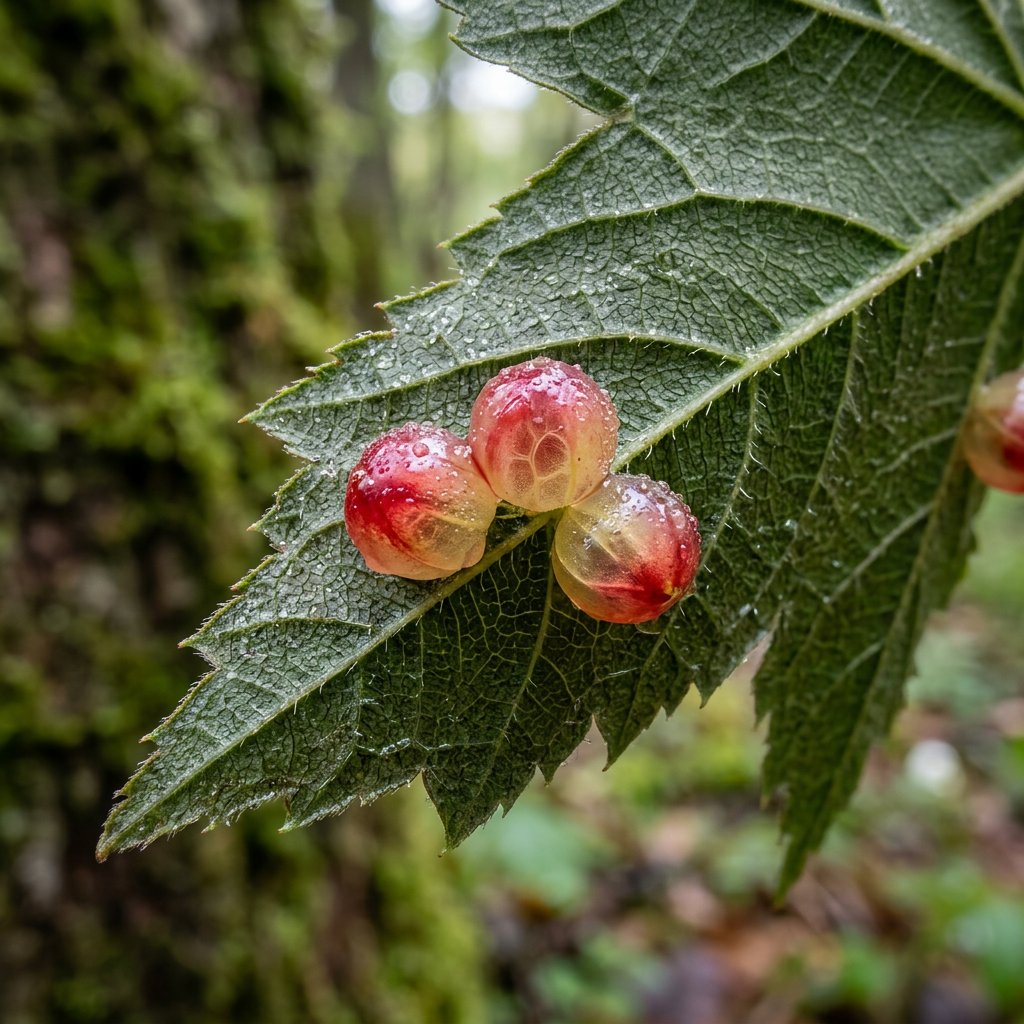
- 🔴 The Leaf Galls: Look for round, pea-sized "pimples" protruding from the surface of Sycamore or Maple leaves. These are the most visible signs of the wasp's presence.
- 🎨 Vibrant Colors: The galls often start as a pale, lime green but ripen into a striking cherry red or orange-yellow as the season progresses, making the leaf look like it is covered in tiny berries.
- 🪹 Root Structures: In its alternate lifecycle phase, this wasp creates brownish, fleshy, marble-like structures on the roots of the tree, though these are rarely seen by casual observers.
- 🐜 The Adult Wasp: The actual insect is tiny (only a few millimeters long) and dark-colored. They look more like harmless gnats than the typical yellow-and-black wasps people usually recognize.
🌲 Habitat & Ecology
- 🍁 Maple Specialist: This insect is a "specialist," meaning it relies almost exclusively on the Sycamore Maple (Acer pseudoplatanus). It is commonly found in woodlands, parks, and gardens across Europe and parts of Western Asia where these trees thrive.
- 🔄 The "Generation Gap": This wasp follows a complex "heterogony" cycle. One generation consists only of females that hatch from the roots and lay eggs on the leaves without needing a mate. The following generation includes both males and females that hatch from the leaf galls to head back to the roots.
⚠️ Safety & Toxicity
- 🛡️ Completely Harmless: Pediaspis aceris is a "friend" to humans. They do not possess a functional stinger, they do not bite, and they are not interested in human food or homes.
- 🌳 Tree Impact: While a tree covered in bright red galls might look sickly, the damage is almost entirely cosmetic. These wasps have lived alongside maples for millennia, and a healthy tree can easily support hundreds of galls without any long-term health issues.
- 🐾 Pet Safety: These insects and their galls are non-toxic to dogs, cats, and horses.
✨ Fun Fact
The gall is a "biological fortress." Not only does it provide the wasp larva with a constant food source from the tree's own nutrients, but the thick walls of the gall also provide a climate-controlled environment that protects the inhabitant from drying out in the summer sun!
More Details








