Info
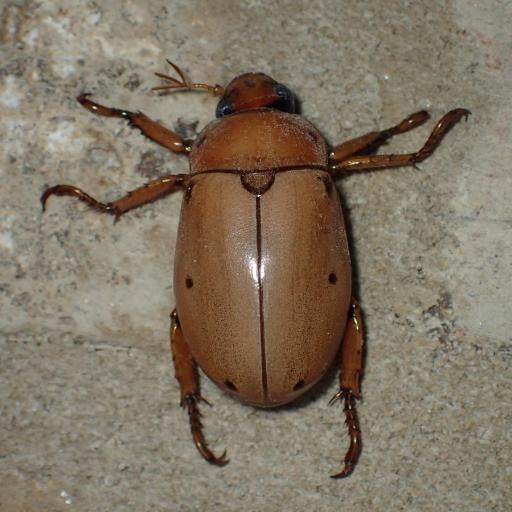
Often mistaken for a giant, golden ladybug, the Grapevine Beetle (Pelidnota punctata) is a charismatic member of the scarab family. With its polished, honey-colored armor and distinct black dots, it’s a frequent summer visitor to porches and garden trellises across North America. While its size can be startling, this "gentle giant" is a harmless leaf-nibbler that plays a small role in the great cycle of forest decay.
🔍 How to Identify
- 🪲 Polished Armor: A large, robust beetle (about 1 inch long) with a glossy, yellowish-tan or dull orange body that looks almost like burnished wood.
- ⚫ The Spots: Look for three distinct black spots arranged in a line down each side of the wing covers, plus two more on the thorax (the "shoulders").
- 🦶 Dark Extremities: Their legs and undersides are typically a dark, shimmering greenish-black, providing a sharp contrast to their lighter backs.
🌲 Habitat & Ecology
- 🍇 Vineyard Resident: As the name suggests, adults are primarily found near wild or cultivated grapevines and Virginia creeper. They spend their days munching on leaves, though they rarely cause enough damage to be considered a serious pest.
- 🪵 The Wood-Wranglers: While the adults love leaves, the larvae (large white grubs) live a completely different life. They stay underground or inside well-rotted logs and stumps, where they help the environment by breaking down decaying wood.
- 💡 Night Owls: These beetles are nocturnal and are famously attracted to artificial lights. If you hear a loud, heavy thud against your window screen on a July night, it is likely a Grapevine Beetle looking for the "moon."
⚠️ Safety & Toxicity
- ✅ Perfectly Safe: The Grapevine Beetle is non-toxic and lacks the ability to sting or bite humans. They are a "friendly" insect for children to observe closely.
- 🤏 The "Cling" Factor: If one lands on you or you pick it up, you will feel their powerful, hooked legs. This "scratchy" feeling is just the beetle trying to get a grip—it is not an attack!
✨ Fun Fact
✨ The Great Pretender: When the Grapevine Beetle flies, its large wings create a deep, loud buzzing sound. This "drone" is so convincing that it often tricks predators (and humans!) into thinking a much more dangerous hornet is approaching!
More Details








