Info
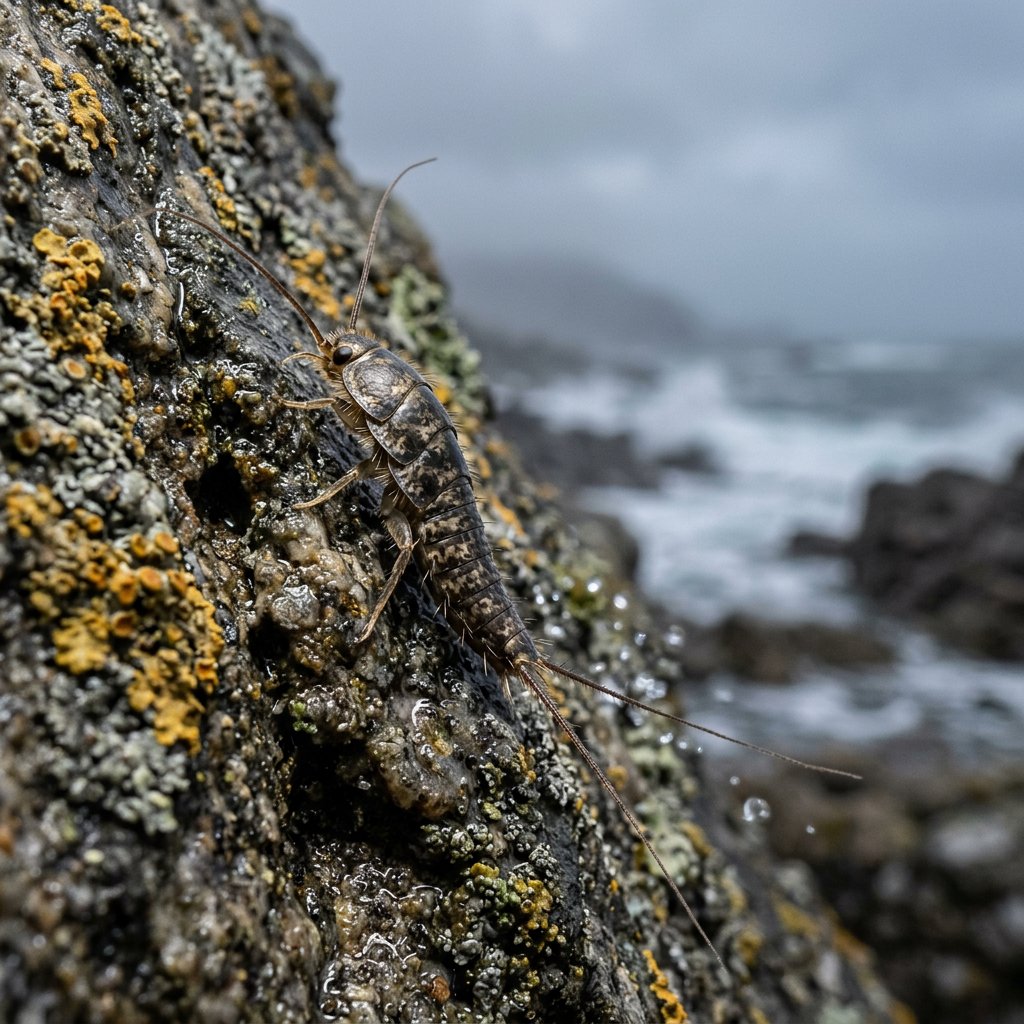
Often mistaken for a silverfish that decided to go on a beach vacation, the Petrobius (commonly known as the Sea Bristletail) is a true "living fossil." These primitive, wingless insects have remained largely unchanged for over 300 million years, predating the dinosaurs. While their scaly, shrimp-like appearance might look intimidating to some, they are harmless coastal acrobats that spend their lives dancing across rocky shorelines.
🔍 How to Identify
- 🦎 Body Shape: Tapered and cylindrical, covered in tiny, overlapping scales that give them a metallic or mottled grey-brown appearance.
- 👀 The Eyes: They possess large, compound eyes that remarkably touch each other in the center of the head, a key feature that distinguishes them from common house silverfish.
- 尾 The "Three-Pronged" Tail: Three long, hair-like filaments extend from the rear, with the central one being significantly longer than the two side cerci.
- 🦐 Shrimp-like Profile: When viewed from the side, they have a slightly arched back, making them look like a land-dwelling crustacean.
🌊 Habitat & Ecology
- 🪨 Rocky Foundations: As their name suggests (petra meaning rock), they are found almost exclusively on coastal cliffs, stone walls, and rocky beaches just above the high-tide mark.
- 🌙 Night Owls: They are primarily nocturnal, emerging from crevices at night to graze on algae, lichens, and decaying organic matter found on the surface of stones.
- 🏃 The "Spring" Mechanism: Unlike most insects, they can jump! By rapidly snapping their abdomen and tail against the ground, they can catapult themselves several inches into the air to escape predators like birds or crabs.
⚠️ Safety & Toxicity
- 🛡️ Status: Completely harmless to humans and pets.
- 🚫 No Bite or Sting: They lack any venom, stingers, or mouthparts capable of piercing human skin. They are non-invasive and will not survive long if they accidentally wander inside a home, as they require the salty, humid air of the coast.
✨ Fun Fact
Bristletails have a unique way of molting (shedding their skin). Before they molt, they must "cement" themselves to a rock using their own fecal matter. If they don't anchor themselves properly, they cannot successfully crawl out of their old exoskeleton!
More Details








